Designer Jewelry Trabert Hoeffer-Mauboussin Claudette Colbert Marlene Dietrich
Check the listing for details.


| Location | Lummi Island US |
| Shipping | Free shipping (check listing for details) |
| Seller |
ancientgifts
100.0% positive · 5615 feedback
|
| Listing | FixedPrice · Active |
| Start time | 2025-09-23T14:21:57.000Z |
| Brand | Museum of Fine Arts Boston |
| Publication Year | 2014 |
| Type | Catalog |
| Format | Hardcover |
| Language | English |
| Era | Art Deco (1915-1935) |
| Length | 134 pages |
| Dimensions | 9x6 inches; 1 pound |
| Topic | Jewelry & Watches |
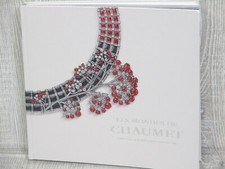
The Jewels of Trabert & Hoeffer-Mauboussin: A History of American Style and Innovation by Boston Museum of Fine Arts.NOTE: We have 75,000 books in our library, almost 10,000 different titles. Odds are we have other copies of this same title in varying conditions, some less expensive, some better condition. We might also have different editions as well (some paperback, some hardcover, oftentimes international editions). If you don’t see what you want, please contact us and ask. We’re happy to send you a summary of the differing conditions and prices we may have for the same title.DESCRIPTION: Hardcover with Dustjacket. Publisher: Museum of Fine Arts Boston (2014). Pages: 134. Size: 9x6 inches; 1 pound. From the mid-1930s through the 1940s, the collaboration of the American jewelry firm Trabert & Hoeffer with the Parisian house Mauboussin produced some of the most extraordinary high-style jewels of its time. Hollywood stars such as Claudette Colbert and Marlene Dietrich appeared on-screen and off flashing the firm’s historic gems mounted in diamond-studded platinum settings. Even during the Depression and World War II, Trabert & Hoeffer–Mauboussin prospered and expanded across the country, not only by continuing to supply stylish custom jewelry to celebrities and socialites, but also by marketing more affordable ornaments. Its best -known invention was the Reflection line of semi-custom jewelry--"Your personality in a jewel." Crafted from interchangeable parts, it made a bold new modern look available to a wider range of customers by allowing them to mix and match preconstructed parts with their own choice of gemstones. Drawing on historical sources that include part of the firm’s design archives, now at the Museum of Fine Arts, Boston, this book tells a story of design and marketing innovations, shrewd business decisions and adaptability to changing times that produced a legacy of dazzling jewels. CONDITION: NEW. New hardcover with dustjacket. Museum of Fine Arts Boston (2014) 140 pages. Unblemished and pristine in every respect. Pages are clean, crisp, unmarked, unmutilated, tightly bound, unambiguously unread. Satisfaction unconditionally guaranteed. In stock, ready to ship. No disappointments, no excuses. PROMPT SHIPPING! HEAVILY PADDED, DAMAGE-FREE PACKAGING! . PLEASE SEE DESCRIPTIONS AND IMAGES BELOW FOR DETAILED REVIEWS AND FOR PAGES OF PICTURES FROM INSIDE OF BOOK. PLEASE SEE PUBLISHER, PROFESSIONAL, AND READER REVIEWS BELOW.PUBLISHER REVIEWS: REVIEW: Yvonne J. Markowitz, with contributions by Elizabeth Irvine Bray, Nonie Gadsden, Elizabeth Hamilton, Frederic A. Sharf, and Toni Strassler From the mid-1930s through the 1940s, the collaboration of the American jewelry firm Trabert & Hoeffer with the Parisian house Mauboussin produced some of the most extraordinary high-style jewels of its time. Hollywood stars such as Claudette Colbert and Marlene Dietrich appeared on-screen and off flashing the firm’s historic gems mounted in diamond-studded platinum settings. Even during the Depression and World War II, Trabert & Hoeffer–Mauboussin prospered and expanded across the country not only by continuing to supply stylish custom jewelry to celebrities and socialites, but also by marketing more affordable ornaments. Its best-known invention was the Reflection line of semi-custom jewelry - “your personality in a jewel.” Crafted from interchangeable parts, it made a bold new moderne look available to a wider range of customers by allowing them to mix and match preconstructed parts with their own choice of gemstones. Drawing on historical sources that include part of the firm’s design archives, now at the Museum of Fine Arts, Boston, this book tells a story of design and marketing innovations, shrewd business decisions, and adaptability to changing times that produced a legacy of dazzling jewels. PROFESSIONAL REVIEWS: REVIEW: Publishing true stories must include two things: amazing resources and immense knowledge. Yvonne J. Markowitz possessed the knowledge and the Museum of Fine Arts, the resources. This amazing true story was wonderfully documented. It is an 'homage" to talent and style, from both side of the Atlantic Ocean and tells the story of two incredible Jewelry houses from France and the USA. Both houses perfected the recipe for success: vision, creativity, and entrepreneurship. This fabulous jewelry was fearlessly crafted and marketed perfectly. This detailed, accurate reference to timing, names and historical events makes this a fascinating read. In addition to the imagery of the jewelry, and the movie stars that wore the jewelry, makes this story alive as one reads it. It seems that Trabert & Hoeffer-Mauboussin were “trendsetters” understanding the importance of publishing and advertising; especially when they referred to cinemas divas, as a marketing tool. In fact, it feels like they started what is called today “the Red Carpet”! This book was absolutely needed! The contemporary look at this important “period” of the jewelry history is now recorded for ever and will be welcomed by all jewelry lovers and those who study jewelry or simply curious about it. Every public library shall be proud to have it in the future. It also shows that, no matter the crisis of a specific time in history, Art (in this case jewelry) is what matters and stays. Congratulations Yvonne J. Markowitz and the MFA team of the Rita J. Kaplan and Susan B. Kaplan Jewelry department of the Museum of Fine arts. [Gerard Riveron, Executive Director, Dorfman Jewelers, Boston]. REVIEW: In the economic hard times leading up to World War II, when many New York jewelry firms were failing, the American company Trabert & Hoeffer, Inc. not only survived but thrived. Established in 1926 by Randolph Trabert and William Howard Hoeffer, it quickly found a foothold in the New York high-society scene. When Trabert died in 1930, Hoeffer steered the firm to even greater success. A merger with Paris jeweler Mauboussin in 1936 created a strong brand known for innovative and sophisticated jewelry.“A study of their work is important to understanding American high style in the 1930s and ’40s,” says Yvonne Markowitz, the Rita J. Kaplan and Susan B. Kaplan curator of jewelry at the Museum of Fine Arts, Boston. Markowitz is working on an upcoming book* about the Trabert & Hoeffer, Inc.-Mauboussin (T&H-M) union, to be published under the auspices of the museum, which has acquired a partial archive of drawings and photographs of the jewels made by the firm.Very early on, notes Markowitz, Hoeffer had his eyes on Paris. “He understood that Paris was setting the style.” The jewelry designs the firm created “very closely followed Paris fashion.” Seeing Cartier and other French firms gain ground in New York City, Mauboussin Paris opened its own store there in 1926. “They were fairly successful,” says Markowitz, but then the stock market crashed. “They decided that if they were to succeed in America, they needed to follow new money,” something Trabert & Hoeffer was already doing, forging relationships in the burgeoning Hollywood cinema scene. It seemed a natural fit for the two companies to unite.Pierre Mauboussin and Hoeffer entered into a collaboration in 1936. Trabert & Hoeffer got the Paris name and connection and Mauboussin got the means to establish its reputation in the U.S. in a tough retail climate. “Although it wasn’t a legal entity and no one knows how or if money changed hands,” says Markowitz, the partnership lasted for 17 years.In the early 1930s, Hoeffer already had made inroads into the Hollywood set. It was the beginning of the golden age of cinema and many of the film production houses were renting jewelry to be used in the films. Hoeffer saw that as an opportunity. The firm received wonderful exposure in an on-screen credit line as the sole supplier of the jewelry used in many successful films. Moreover, it put the firm on the radar of the silver screen’s leading ladies, who not only wore their own jewelry in their movies but around town. It was a practice that he continued to build on after the merger. Paulette Goddard and Marlene Dietrich, says Markowitz, were big T&H-M customers.The firm’s camera-loving creations from the 1930s through the ’40s were big and bold three-dimensional designs that were very “in your face,” says Markowitz. One of the firm’s signature pieces was a necklace with incredible star rubies set in platinum and diamond mounts that was showcased by Claudette Colbert in the 1935 film “The Gilded Lily.” Explains Markowitz, “Created by Hoeffer and his designers in 1934, these very long ‘multiuse’ necklaces were designed so that extraordinary gemstones — star sapphires and rubies of 40, 50 and 60 carats — were placed at points where the necklace could be taken apart and worn as separate bracelets, clips, pendants and earrings.”There was an incredible fashion fad in the late 1930s-early 1940s for star rubies and sapphires, continues Markowitz, “and a lot of that I think has to do with T&H-M and Hoeffer.” The firm produced and heavily promoted rings with fabulous faceted stones accented with diamonds in platinum settings. “Hoeffer liked to make bold colored stones the centerpiece but there are also,” says Markowitz, “a lot of diamonds in the pieces.” T&H-M built a reputation as being an important retailer of significant gem-laden jewelry.This passion for high-quality gemstones was part of the firm’s raison d’être from the beginning. Among the distinguished stones it acquired: the Star of Bombay, a 181.82-carat star sapphire from Sri Lanka (Ceylon), the Star of Burma, an 83-carat cabochon-cut star ruby and the 25-carat emerald-cut diamond Hoeffer named the Star of Kimberly. The Star of Bombay was made into a ring Douglas Fairbanks, Sr. gave his wife Mary Pickford, who bequeathed the stone to the Smithsonian. Ever mindful of marketing opportunities, Hoeffer exhibited the magnificent gems in his stores to attract the public. And along with lending jewels to Hollywood films, he also placed them in ads with luxury automobiles like Cadillac, where the jewelry firm also received a credit line.In another shrewd move, Markowitz notes, “Hoeffer bought the total output of the Muzo emerald mines in 1945 and became an important dealer in emeralds.” Even the lesser stones were put to use and slices of natural crystals or “emerald rough” were mounted into a variety of smaller items from pendants to bracelet charms and cufflinks and sold as patented “lucky rough emerald jewelry.”Realizing that many of his clients could no longer afford custom-designed jewelry, Hoeffer created a more affordable but still personalized line. Called “Reflection —Your Personality in a Jewel,” it creatively combined machine-made and hand-finished components. Clients could choose from a variety of precast design elements to design a customized piece of jewelry, explains Markowitz. “It cut down on a lot of the design and fabrication time — a whole suite of jewelry could be made in two weeks.” The Reflection collection was “enormously popular and was heavily advertised in leading fashion magazines,” says Markowitz. “People were encouraged to ‘reflectionize’ their old jewelry” — remounting the stones in new settings.The Reflection series used a lot of colored gems — amethyst, aquamarines, citrines — the kind of stones associated with Moderne or Retro style pieces, “which were easier to obtain at that time,” Markowitz notes. “For the same reason, with platinum allocated for war use, the Reflection series was almost always done in gold — both 18-karat and 14-karat, which also helped lower the cost point.” The Reflection jewels are the pieces mostly seen at auction, Markowitz says, noting that “they come onto the market pretty frequently. Prices depend upon the materials. The necklace that Claudette Colbert wore in ‘The Gilded Lily’ was valued at the time by Hoeffer at $1 million.” Jewelry using the more “important” stones doesn’t come onto the market that often because over the years, the gems were removed to be reused or multiuse pieces were broken up into their various components. In 1953, Mauboussin concluded its collaboration with Trabert & Hoeffer and by the mid-fifties, Hoeffer himself lost interest in the jewelry trade and became a real estate developer in New Jersey. “The firm continued on,” concludes Markowitz, “with a number of shops in Miami, Chicago, and New York City, but the stores, while retaining the name, are basically independent retailers, no longer on the cutting edge of influencing design and style as they were in the late thirties and early forties. T&H-M was a brilliant flash for a very brief period of time but it left a mark.”READER REVIEWS: REVIEW: Beautiful photographs! A well written and interesting history of American jewelry design and manufacture's coming of age in the 20th Century. Read how world history and the role of a clever entrepreneur expanded the American market and defined our choices in jewelry today. Delightful! REVIEW: This small book about the story of Trabert & Hoeffer-Mauboussin jewelry is eminently readable whether you are a jewelry connoisseur or someone who knows very little about the subject. The essays showcase the talents of its authors-curators, historians, jewelry professionals, and collectors. Packed with scholarship and years of experience, each essay is a small gem of writing. This book makes a wonderful companion piece for the exhibition "Hollywood Glamor" now at the Museum of Fine Arts, Boston until March 2015. Both are well worth a look. REVIEW: This is an excellent history of a great firm about which there is little known. According to the book, the archive at the Museum of Fine Arts, Boston is fragmentary and consists primarily of a selection of Reflection line drawings and some vintage photos. The drawings are all online on the museum’s website. It’s refreshing to have a jewelry book that is more than a coffee table book with blown-up
color plates. REVIEW: I'm a collector of 20th century fine jewelry and have a few pieces of jewelry by Trabert,Hoeffer-Mauboussin. I consulted several jewelry books and the internet and couldn't find much information on the company. This book fills that gap.REVIEW: I want everything in this book, either real or fake. Glorious pieces and photographs! ADDITIONAL BACKGROUND: Vintage Jewelry: How vintage jewelry brings old-time glamour to the red carpet. Among all the gemstones paraded on the red carpets of Cannes, Venice, Hollywood and New York, some pieces leave an indelible impression. At this year’s Manus X Machina-themed Met Gala, the award for best supporting accessory went to a majestic diamond peacock, its tail curving over one strap of Uma Thurman’s custom-made Ralph Lauren ivory gown. Created as a special order by Cartier in 1948 and comprising 83.89ct of diamonds, the brooch demonstrated the power of vintage when it comes to making a statement on the red carpet. "Vintage jewelry brings character and a sense of nostalgia to a look," says LA-based British stylist Tanya Gill, who dresses stars such as Kate Winslet, Julie Christie and Jane Fonda. "I love the craftsmanship, the history and the patina. Sometimes I’ll build characters through the jewelry as though I am creating a look for a film." Gill was responsible for the eye-catching vintage Bulgari bib necklace that Minnie Driver wore to the Vanity Fair Oscars party in 2014. Made in 1965, the necklace caught Gill’s eye at Bulgari’s Decades of Glamour pre-Oscar event. "It struck me as so exquisite in design and color, with the craftsmanship of the turquoise, cabochon emeralds, cabochon amethysts and diamonds, that it would be a unique statement for the right personality," she says. "It was perfect for the statuesque beauty of Minnie Driver." It’s not only Hollywood’s grandes dames who carry off vintage glamour. At the Met Gala, Anna Wintour’s 29-year-old daughter, Bee Shaffer, was every inch the ingénue in 19th-century diamond chandelier earrings and a slim diamond headband by the New York-based vintage-jewelry specialist Fred Leighton, while at the reopening of Cartier’s Fifth Avenue mansion in September, Sienna Miller accessorized a fresh, floaty Valentino dress with a suite of diamond and emerald Cartier jewels from the 1920s. The trend for vintage jewelry on the red carpet was kick-started in 1996, when Prada borrowed a 19th-century opal choker from Fred Leighton for a then-29-year-old Nicole Kidman. "It was a wonderful moment for us," recalls Rebecca Selva, Fred Leighton’s chief creative officer and public relations director. "It commanded tremendous attention because it was so different." The collaboration sparked a long-term relationship with Kidman and began two decades of "beautiful and iconic moments" for Fred Leighton. Selva cites Charlize Theron’s appearance at the Vanity Fair Oscars party in 2000 as one of her favorites: clasped to the 25-year-old’s tangerine Vera Wang dress were two art-deco diamond clips. "Vera fell in love with the clips and then created the dress around them," says Selva. "The whole image was beautiful; it was Hollywood glamour in the most sophisticated and refined way." Nowadays, as celebrity outfits are dissected on social media in real time, red-carpet appearances have even more effect on what used to be a very private, elitist market. "The internet has been great in spreading the message about vintage jewelry," says Selva. "There’s so much to discover – people realize it’s not what they thought it was. It’s not your grandmother’s jewelry, and nothing is so rarefied that it can’t be worn. Even our tiaras can be worn as headbands." For Selva, increased visibility helps to dispel the myth that antique jewelry is outdated. "We have an unbelievable 19th-century diamond snake necklace that looks like the coolest piece anyone could wear, yet it’s almost 120 years old," she says. "It’s waiting for its red carpet moment." Vintage jewelry’s reputation in the fashion world has been elevated further by Fred Leighton’s collaboration with Net-a-Porter, which began in 2014. Both antique jewels and new pieces from the Fred Leighton Collection (which are inspired by vintage designs) are available online, with prices ranging from £1,500 for a simple pair of drop earrings to tens of thousands for signed vintage pieces by the likes of Cartier, David Webb or Buccellati. "We’ve had a really positive response, with jewelry often selling out within minutes," says Sophie Quy, fine-jewelry buyer at Net-a-Porter, who travels to the Fred Leighton store in New York up to four times a year to look for pieces. Diamonds, pearls and turquoise are bestsellers, along with chunky gold chain bracelets that customers wear stacked with modern designs. The site also works with Fred Leighton to source vintage pieces on demand. Antique jewelry has also found a place in uber-fashionable department store Dover Street Market, which carries a selection of vintage rings and Victorian and Georgian tiaras by British jeweler Bentley & Skinner alongside its roster of modern brands. This departure from the notion of dusty vintage emporiums reflects an increasing desire to own something one-of-a-kind. "Vintage jewelry is much more interesting than anything you can buy now," says Max Michelson of the London vintage specialist SJ Phillips. "Instead of being tied to this year’s range, we have 400 years’ worth of ranges, so you’ll always find something that fits." He says 20th-century pieces are far and away the most popular. "Everyone wants art deco because it’s stylish and nicely made, and being set in platinum it looks closer to modern jewelry than earlier pieces, which are set in silver. There’s also interest in bold pieces from the 1950s and ’60s." Unlike its American counterpart, SJ Phillips doesn’t shout about red-carpet appearances. "That type of advertising works in the States but not here," Michelson says. "Even if a piece has been worn by someone famous, we don’t tell people." While signed vintage pieces carry a price premium, there are smart buys to be found. "There are some under-appreciated American makers such as Raymond Yard," says Michelson. "But there are also unsigned pieces that are a match to the big names but half the price." The main thing is that it speaks to the wearer. "We never claim that anything is going to be a good investment. It might be, but we’re not an investment broker." Rebecca Selva agrees: "If jewelry is fine and fabricated beautifully, it will hold its value, but I would certainly never sell it as an investment. It’s more about the joy you get from it." [Telegraph (UK)]. Vintage Jewelry: Dust off your old jewelry boxes and open-up the family vault because you might just be sitting on a fortune. That’s the message from London auctioneer Bonhams this week, as they announced new figures showing the soaring value of vintage jewels. Bonhams say the value of antique and period jewelry has increased by over 80% in the last decade - outdoing average house prices in England, which increased by 47% over the same period. Estimates have been abandoned on auction days, as items have been fetching double, sometimes triple, their predictions amid fierce bidding wars. And it’s prompted the auctioneer to launch a campaign urging the public to seek valuations for any forgotten gems they might have stashed away. “An Art Deco Cartier emerald and diamond bracelet that we sold in December was estimated at £80,000-£100,000 and it made £210,000,” says Jean Ghika, head of jewelry at Bonhams UK and Europe. “These types of instances are our key indicators of a gain in momentum. It’s the quality of craftsmanship that is resonating with buyers, the types of stones that were used back then, compared to a modern piece, are special.” Vogue’s jewelry editor Carol Woolton isn’t surprised by the jewelry market’s strength in the current economic climate. “There are so few investments that are reliable right now - stocks are in a state of insecurity, but gold and diamonds will never be a risky purchase for a rich person trying to maintain their wealth,” she says. “There are limited resources in the world, mines will run out and there is a finite number of precious stones - that’s what gives it a rarity value.” Even if you haven’t got a spare Cartier brooch in the attic to auction off, it’s worth noting that the trend described extends beyond designer names, and applies to specific stones, metals and eras, too. If the catwalks are revisiting silhouettes from a particular decade, the interest will echo through the jewelry world. “Signed items from the Art Deco period and antiques over 100 years old will always be in demand,” says Ghika. “But we’re now seeing post-war period, 1950s jewelry, as well as pieces from the 1960s and 1970s really performing well too.” xThe thing that often prevents people from having their jewelry valued is the assumption that family heirlooms have been set aside because they’re no longer fashionable won’t be worth anything. “People often look at their items without understanding their importance in the context of jewelry history,” says Ghika. “We recently discovered a wonderful and rare Chanel Twist necklace, which a client had brought to a valuation day, but had thought it was just a piece of costume jewelry. But Chanel did make real jewelry as well as pieces in non-precious materials.” This 1950s necklace had a discreet engraving on the inside, indicating that it was actually designed by Coco herself, and it subsequently smashed its estimate of £6,000, fetching £68,500 on auction day. So how can you tell if something is valuable when digging through an old jewelry stash? Start with the logos and hallmarks, suggests Ghika, noting that the big names (Cartier, Tiffany, Bulgari, Boucheron and Van Cleef and Arpels) will always be winners, but that key names from modern eras (like Andrew Grima of the 1960s, or John Donald of the 1970s) will have equally held their value. Next you should assess the piece’s construction; do the stones have rough edges, are they generously packed in, or was its maker trying to scrimp by using more metal, less diamonds? Even the battered and broken is not entirely beyond hope. “It’s not necessarily the end of the world if something has had some damage,” says Ghika. “Professional repairs, if done well, can be discreet. We have had items come into us in two pieces before and, after it is mended, it hasn’t greatly impacted on the value.” The best way to truly know what something might be worth is, of course, to get it valued by a professional. Because it is unlikely that you will be able to tell that the sapphires in granny’s heirloom ring were super-desirable specimens from the Kashmir region or the product of a rare mining community that was only operational for a ten years at the end of the 19th Century. “The Bonhams website offers the option to submit photos if you want to get an initial impression from our experts, then we hold regular valuation days all over the UK,” advises Ghika. What you can do for yourself, though, is take care of the stocks you’ve got - whether you’re ready to sell them or not. “If you ever think you might sell jewelry on, then you must keep the boxes,” urges Woolton. “The boxes and the paperwork for stones will really add to their value and save a lot of confusion as to what something is when you sell.” The worst thing you can do is to let your old jewelry rattle around in a disorganized box. “Don’t over-clean old pieces,” Ghika also warns. “Part of the history is the pattern that it has and if it’s stripped off then it lacks some of its soul.” Other expert tips include not keeping hard and soft stones together to prevent erosion, wiping pearls with a cloth after every wear to remove any oils or perfume, and even splitting pairs of earrings into individual soft pouches so that they don’t rub together. If you’re keen to run with 'gems over property’ as your new investment mantra, the experts say you may have to wait a while for the dividends if you choose more recent pieces. “jewelry takes a long time to appreciate,” says Ghika, who suggests buying classics distinct to particular makers, like Cartier’s Panthère collection. Woolton, meanwhile, tips Dior’s fine jeweler Victoire de Castellane as one who will create the “masterpieces of our time.” One thing all experts agree on however, is that primarily jewelry should be worn and enjoyed, with any increase in value seen as an added bonus. “It’s all very well owning these wonderful things,” says Woolton. “But if investors lock them away and don’t wear them then you have to ask; where’s the fun in that?” [Telegraph (UK)]. Vintage Jewelry: The rise of online vintage jewelry auctions. As the Blue Moon diamond gets set for auction, our expert has the lowdown on the growing popularity of online sales which is making it easier than ever to bid for precious pieces. The global reach of the internet has raised the profiles of local salerooms and consumer confidence with it. When I was an auctioneer for Sotheby’s it was a one-person show; quite the adrenaline rush, the aim was to keep the “room” engaged in enthusiastic bidding. Today, with online sales increasing, auctions are just as busy but with fewer people actually in the room. Some of the thrill has gone but the benefit of online auctions is that they’ve boosted the profile of provincial salerooms, making them a force to be reckoned with. At Woolley & Wallis Salisbury Salerooms, for instance, an Art Nouveau Lalique haircomb came up for auction last year. The piece was notable for two reasons: highly collectable names such as Lalique were once the preserve of well-known auction houses. Now, the global reach of the internet has raised the profiles of local salerooms and consumer confidence with it. But the haircomb made a particular impact because it had previously been bought at an auction in Wellington, New Zealand, where it was erroneously catalogued as plastic and sold for around £2,000. Woolley & Wallis’s sale attributed its genuine provenance as horn, and sold it for £29,000. Here’s my guide to noted provincial auction houses which also offer online auctions. According to Jonathan Edwards, associate director at Woolley & Wallis auctioneers in Wiltshire, underbidders are making a big impact on prices being realized at auction today. There is also the fact that bids are coming not only from the UK but internationally, too. In May last year a natural pearl necklace was sold to an online bidder at the Wiltshire auctioneers for a staggering £89,000, against an estimate of £50,000-70,000. It is the highest-priced jewel sold online at Woolley & Wallis to date. Fellows auctioneers, which offers more than 40 specialist jewelry sales a year, is witnessing a substantial annual increase in its online sales, which represents around 45 per cent of its turnover now. “Rare pieces are going out to a global marketplace and there is no snobbery about which auction house you bid in any more,” says Geoff Whitefield, insurance manager at Fellows. A client who thought a pair of earrings were costume jewelry was staggered when they went under the hammer for £25,000 this year. Fellows is holding jewelry auctions throughout November and December. Bellmans recently sold a pair of Twenties French platinum-and-diamond bracelets, which linked together to also form a necklace, for £14,000. Jonathan Pratt, managing director at Bellmans, advises that anyone considering buying from an online auction should first check the saleroom’s professional accreditation. “Look for trade-association endorsement, such as the Society of Fine Art Auctioneers and Valuers (SOFAA), and the Association of Accredited Auctioneers (AAA),” he says. It’s also worth checking that auction jewelry specialists are qualified and have obtained a recognized gemological certificate. Bellmans is holding a jewelry auction on 4 December. The-saleroom.com started its live webcast auctions in 2006. Visitors to the site can browse auction catalogues and place bids over the internet in real time, with live audio and video feeds direct from the auction rooms. The site hosts jewelry auctions throughout the year, so if you are looking for a particular item, simply type keywords into the search engine and it will list suitable lots. The most important sales are still the preserve of international auction houses Sotheby’s, Christie’s and Bonhams, not least because of their global reach and relationships with leading collectors and dealers. These are the sales where you will see jewels that will take your breath away, including the Blue Moon diamond going on sale at Sotheby’s Geneva on 11 November. The largest fancy vivid blue, internally flawless 12.03ct diamond ever to come up for auction, with an estimate of US$35-55million, looks likely to break all previous records. “Auctioneers have adapted quickly to the demand for online bidding,” says Keith Penton, head of Christie’s London jewelry department. “It brings added interest and excitement to the atmosphere of the saleroom, particularly when the prospective buyer’s location is revealed to be in a far-flung location; it’s not unusual nowadays to hear: ‘sold to you on the internet in Bogota’.” (Note: Sotheby’s, Christie’s and Bonhams are not part of a sourcing portal platform so you will need to go to the individual websites to watch live auctions.) For Bonhams, which last year conducted 43 jewelry sales around the world, online bidding has encouraged a new clientele. “It’s about bringing the auction experience to millions of people who have never set foot in a saleroom before,” explains Matthew Girling, global CEO and director of jewelry. Online bidders accounted for more than £5m of Bonhams jewelry sales in 2014. This is also reinforced by the increase in volume of registrations it is seeing at Bonhams monthly Knightsbridge jewelry sales. Sotheby’s has also witnessed an increase in the number of online buyers participating in their worldwide jewelry sales over the past five years. In a 12-month period between 2013 and 2014, it saw a staggering 42 per cent increase in online bidding. So when that “Blue Moon” diamond goes up for auction at Sotheby’s Geneva, make sure you switch on your computer, get out the champagne, and witness a unique gem making history. Anyone can listen to or watch a live auction by simply clicking on “view as a guest”, although for data protection reasons you will not be able to see anyone bidding in the room. At Sotheby’s and Christie’s major Geneva, New York and Hong Kong sales, both auction houses have their own facility where you need to register on the website to follow the action, which can make for compulsive viewing. If you want to register to bid, you’ll be required to answer a series of security questions and, ultimately, it is still the individual auction houses that will accept your application if you’re registering interest through a sourcing portal. Once you’ve bid you have entered a binding contract with the auction house and if you are bidding via a sourcing portal such as thesaleroom.com there is a 3 per cent handling charge added to the final price after the buyer’s premium. Make sure you take a good hard look at all the images – including at the reverse image – as well as at the hallmarks. If the auctioneer has stipulated what the item is, then that is their guarantee. Also make sure you’ve checked dimensions so that there are no surprises when your item arrives and is much smaller or bigger than you’d hoped. View the items first and build a relationship with the auction house: it is always reassuring if you know who you are talking to at the other end of the phone when advice is needed. [Telegraph (UK)]. A History of Gold: Gold, chemical symbol Au (from the Latin aurum meaning ‘shining dawn’), is a precious metal which has been used since antiquity in the production of jewelry, coinage, sculpture, vessels and as a decoration for buildings, monuments and statues. Gold does not corrode and so it became a symbol of immortality and power in many ancient cultures. Its rarity and aesthetic qualities made it an ideal material for ruling classes to demonstrate their power and position. First found at surface level near rivers in Asia Minor such as the Pactolus in Lydia, gold was also mined underground from 2000 B.C. by the Egyptians and later by the Romans in Africa, Portugal and Spain. There is also evidence that the Romans smelted gold particles from ores such as iron pyrites. Easily worked and mixed with other metals such as silver and copper to increase its strength and change its color, gold was used for a wide range of purposes. In most ancient cultures gold was popular in jewelry and art because of its value, aesthetic qualities, ductility and malleability. Electrum (the natural alloy of gold and silver) was used in jewelry by the Egyptians from 5000 B.C. Gold jewelry was worn by both men and women in the Sumer civilization around 3000 B.C. and gold chains were first produced in the city of Ur in 2500 B.C. The Minoan civilization on Crete in the early 2nd millennium B.C. is credited with producing the first cable chain jewelry and the Minoans made a vast array of jewelry items using an extensive range of techniques. Gold jewelry took the form of necklaces, bracelets, earrings, rings, diadems, pendants, pins and brooches. Techniques and shapes included filigree (a technique known to the Egyptians from 2500 B.C.) where the gold is pulled into wire and twisted into different designs), beaten thin shapes, granulation (surface decoration with small, soldered granules of gold), embossing, chasing, inlaying, molding and engraving. In South America, gold was similarly worked by the Chavin civilization of Peru around 1200 B.C. and gold casting was perfected by the Nazca society from 500 B.C. The Romans used gold as a setting for precious and semi-precious gemstones, a fashion continued into the Byzantine era with the use of pearls, gems and enamels. Gold was first used as coinage in the late 8th century B.C. in Asia Minor. Irregular in shape and often with only one side stamped, the coins were usually made of electrum. The first pure gold coins with stamped images are credited to king Croesus of Lydia, 561-546 B.C. and a contemporary gold refinery has been excavated at the capital, Sardis. Even the purest naturally occurring gold can contain 5% silver but the Lydians were able to refine their gold using salt and furnace temperatures of between 600 and 800°C. The salt mixed with the silver and formed a vapor of silver chloride leaving behind pure gold which could be used to create a standardized coinage of guaranteed gold content. The Mycenaean civilization also widely used gold coins, as did the later Greek and Roman Empires, although silver was the more usual material used. One of the most famous gold coins in antiquity was the Roman bezant. First introduced in the reign of Emperor Constantine it weighed up to 70 Troy grains and was in currency from the 4th to the 12th centuries A.D. The value and beauty of solid gold made it an ideal material for particularly important political and religious objects such as crowns, scepters, symbolic statues, libation vessels and votive offerings. Gold items were sometimes buried with the dead as a symbol of the deceased’s status and the conspicuous (and non-profitable) consumption of such a rare and valuable material must surely have been designed to impress. Perhaps the most famous example is the so-called mask of Agamemnon found at Mycenae. In the Inca civilization of Peru gold was considered the sweat of the sun god Inti and so was used to manufacture all manner of objects of religious significance, especially masks and sun disks. In ancient Colombia gold was similarly revered for its luster and association with the sun and in powdered form was used to cover the body of the future king in a lavish coronation ceremony which gave rise to the legend of El Dorado. As a decorative covering, gold plate and gold leaf (gold beaten into extremely thin sheets) have been used to decorate shrines, temples, tombs, sarcophagi, statues, ornamental weapons and armor, ceramics, glassware and jewelry since Egyptian times. Perhaps the most famous example of gold leaf from antiquity is the death mask of King Tutankhamun. Gold, with its malleability and incorruptibility, has also been used in dental work for over 3000 years. The Etruscans in the 7th century B.C. used gold wire to fix in place substitute animal teeth. As thread, gold was also woven into fabrics. Gold has also been used in medicine, for example, Pliny in the 1st century B.C. suggests gold should be applied to wounds as a defense to ‘magic potions’. Concerns over the authenticity of gold led the Egyptians to devise a method to determine the purity of gold around 1500 B.C. (or earlier). This method is called fire assaying and involves taking a small sample of the material under test and firing it in a small crucible with a quantity of lead. The crucible was made of bone ash and absorbed the lead and any other base metals during the firing process leaving only gold and silver. The silver was removed using nitric acid and the remaining pure gold was weighed and compared to the weight before firing. Archimedes was also aware that the specific gravity of gold is altered depending on the percentage content of base metals, pure gold having twice the gravity of silver for example. Gold is such a precious material that for centuries various attempts were made to produce it through alchemy - that is the chemical transformation of base metals into gold using the philosopher’s stone (lapis philosophorum). First attempts were made in China in the 4th century B.C. and also in ancient Greece and although unsuccessful, nevertheless, the activity laid the foundations of modern chemistry. [Ancient History Encyclopedia]. Gold in the Ancient World: From the earliest of times, gold was often held in awe as the symbol of divinity and was therefore the material of choice for religious objects. Gold was among the first metals to be mined because it commonly occurs in pure form (not combined with other elements), because it is beautiful and imperishable, and because exquisite objects can be made from it. Since gold is found uncombined in nature, early goldsmiths would collect small nuggets of gold from stream beds etc., and then weld them together by hammering. It was oftentimes discovered alloyed with 10%-20% silver, the mixture known as “electrum”. Gold was "discovered" well before 6,000 B.C., most likely in Mesopotamia, though some of the oldest gold objects made by mankind were discovered by archaeologists in present-day Bulgaria (ancient Thrace) and in the Balkans, such as at the Varna Necropolis. In ancient Egypt all gold was the property of the pharaoh. Artifacts and jewelry of gold over 5,000 years old have been uncovered by archaeologists in Egyptian tombs. Around 3,600 B.C. Egyptian goldsmiths carried out the first smelting of ores using blowpipes made from fire-resistant clay to heat the smelting furnace. Ancient Egyptian hieroglyphs describe gold as the brilliance of the sun. In the Near East, by 2,500 B.C., Sumerian goldsmiths were using sophisticated metalworking techniques; cold hammering, casting, soldering, cloisonné, and particularly filigree (fine-wire ornamentation) and granulation (the use of minute drops of gold). The tomb of the Sumerian Queen Puabi, from the city of Ur in about the 26th century B.C., was one of the richest tombs ever uncovered by archaeologists. Queen Puabi was buried with five soldiers and thirteen "ladies in waiting" who had apparently poisoned themselves (or been poisoned) to serve their mistress in the next world. The grave goods she was buried with included a magnificent, heavy, gold headdress made of golden leaves, rings, and plates; a superb lyre complete with a gold and lapis-lazuli encrusted bearded bulls head; a profusion of gold tablewear; cylindrical beads of gold, carnelian, and lapis lazuli woven into extravagant necklaces and belts; a chariot adorned with lioness' heads in silver, and an abundance of silver, lapis lazuli, and gold rings and bracelets. Another of the most famous tombs uncovered by archaeologists was that of 14th century B.C. Tutankhamun. The pharaohs of Egypt insisted on being buried in gold, which they believed was the "flesh of the gods." The boy-king Tutankhamun was enshrined in three gold coffins. The third and final coffin was made of 243 pounds (110 kilograms) of solid gold. As well, gold artifacts and jewelry abounded, including the solid gold mask which weighed 10 kilos (24 pounds). It’s worth noting that Tutankhamun was a minor, almost unknown and forgotten pharaoh. One can only imagine the wealth of gold some of ancient Egypt’s more significant pharaohs (such as Ramses the Great) must have been buried with. The art of fashioning gold jewelry reached the Mediterranean island of Crete (the ancient Minoans) about 2400 B.C. Diadems, hair ornaments, beads, bracelets, and complex chains have been found in Minoan tombs. Near Eastern techniques of filigree and granulation were introduced to Crete about 2000 B.C., and evidence also indicates that Egyptian styles influenced Minoan jewelry. Minoan culture and its jewelry styles spread to the mainland of Greece, then dominated by the city-state of Mycenae, about 1550 B.C. The graves of nobles at the ancient Citadel of Mycenae discovered by Heinrich Schliemann in 1876 likewise yielded a great variety of gold figurines, masks, cups, diadems, and jewelry, plus hundreds of decorated beads and buttons. These elegant works of art were created by skilled craftsmen more than 3,500 years ago. Metalworking techniques reached northern Europe by about 2000 B.C., and the earliest jewelry found there dates from between 1800 and 1400 B.C. These artifacts include lunulae (spectacular, crescent-shaped neck ornaments of beaten gold), most of which were found in graves in Ireland, where gold was once plentiful. There is evidence that the Celtic and early British people were trading with the Eastern Mediterranean races by this time, exchanging gold for faience beads. By 1200 B.C. jewelry making was flourishing in Central and Western Europe, where bronze as well as gold was frequently used to make jewelry, and the spiral was the most common motif of decoration. The fibula-brooch seems to have been invented at about this time. Twisted gold torcs, modeled on Scandinavian bronze prototypes, were made in the British Isles and northern France from the fifth to the first century B.C. These massive circlets for the necks and arms were the characteristic ornaments of the chiefs of the Celtic race, and were symbols of wealth, power and courage across Celtic Europe. Celtic craftsmen also used enamel and inlay to decorate jewelry. By the seventh century B.C. the Etruscans of Central Italy were also making fine gold jewelry. These people may have migrated from Anatolia (present-day Turkey), from where their metalworking skills seem to have been derived. The Etruscans brought to perfection the difficult technique of granulation, whereby the surface of the metal is covered with tiny gold grains. Gold was plentiful in Greece during the Hellenistic Age (323-30 B.C.), and Greek jewelry of this period is characterized by its great variety of forms and fine workmanship. Naturalistic wreaths and diadems were made for the head, and a variety of miniature human, animal, and plant forms were made up into necklaces and earrings. The so-called Heracles-knot, of amuletic origin, was introduced, and remained a popular motif into Roman times. The ancient Mediterranean civilizations appear to have obtained most their supplies of gold from various deposits in the Middle East, as well as gold which came through the Middle East from Southern Africa, and perhaps a minor amount from the Ural Mountains of present-day Russia. Mines in the region of the Upper Nile (south of Egypt) near the Red Sea and in the Nubian Desert area supplied much of the gold used by the Egyptian Pharaohs (the area was known to the ancient Egyptians as “Punt”, and to the ancient Christians as “Sheba” or “Saba”). When these mines could no longer meet Egypt’s demand for gold, deposits elsewhere were exploited, likely including deposits thousands of miles away in Southern Africa. Archaeological evidence indicates that most of the gold in Ancient Egypt and even in the ancient Mediterranean from perhaps 1700 B.C. onwards came from the Himyarites in present-day Yemen (across the Red Sea from Nubia), who in addition to exploiting their own deposits, may in turn have obtained much of the gold they exported to the ancient Egyptians from present day Rhodesia/Zimbabwe. In fact the Himyarites likely controlled most of the east coast of Africa, including Rhodesia/Zimbabwe, and is most likely the area referred to as Monomotapa in ancient texts (known also as the Biblical city of Ophir, from which the Bible records that King Solomon received shipments of gold, silver, ivory, gemstones, and peacocks). Artisans in Mesopotamia and Palestine probably obtained their supplies either directly from the Himyarites or indirectly through (middleman) Egypt. As well, recent studies of the ancient mines in the present Kingdom of Saudi Arabia (directly to the north of Yemen) reveal that gold, silver, and copper were recovered from the Red Sea region, across the Red Sea from the Nubian deposits, during the reign of King Solomon (961-922 B.C.). Around 1500 B.C. artisans of the ancient world developed the “lost wax” method of producing jewelry, allowing for the “mass production” of gold jewelry. At the same time, gold had already become the recognized medium of exchange for international trade. The sixth century B.C. saw the first use of gold in dentistry by the ancient Egyptians, and the introduction of the first gold coinage in Asia Minor by King Croesus of Lydia. By this time, much of the gold in the Classical Mediterranean cultures came from Spain, where extensive deposits of gold and silver were mined and then acquired by the ancient Phoenicians in trade, and then brought from the Western Mediterranean and traded through the ancient Mediterranean world. Eventually the Phoenician colony of Carthage became the leading power of the Eastern Mediterranean, and gained control over these valuable Spanish deposits. In turn the Carthaginians engaged the Romans in three wars before Spain was lost to the Romans. Spanish gold and silver to a great extent allowed the Romans to expand their empire. The “other” great power of the Classical Mediterranean were the Hellenic Greeks, who by 325 B.C. were mining gold from Gibraltar to Asia Minor. When the gold in Spain began to play out, the Romans turned their attention toward the gold mines in Dacia (modern Romania). The Dacians had historically traded this gold to the Greeks for pottery and to the Scythians for amber. About 100 A.D. the Roman Emperor Trajan conquered Dacia, mainly in order to gain control of these gold mines. The Romans also exploited smaller gold deposits found in the British Isles. The Romans used very sophisticated extraction and mining techniques as detailed by the first-century historian and naturalist Pliny the Elder. The Romans were also the first to mass-produce coinage on a monumental scale, the first truly monetized society. Between the second and fourth centuries A.D., the Romans produced millions of gold aureus coins, and billions of silver and bronze coins. At the height of the Roman Empire, there were over 400 mints producing coinage in locations scattered through their dominion. Gold was fashioned into Greek style jewelry during the early Roman Empire, when the chief centers of production were Alexandria, Antioch, and Rome, to which Greek craftsmen had migrated. There was an increasing emphasis in producing gold jewelry on incorporating decorative stones; at first garnets, chalcedonies, and carnelians, but later uncut but polished hard gemstones such as diamonds, sapphires, and, notably, emeralds from “Cleopatra’s Mines” in Egypt. Colorful gemstone jewelry was common during the Early Middle Ages in the centuries immediately following the collapse of the Roman Empire. Mediterranean goldsmiths continued to produce jewelry of great refinement, but the jewelry of the European Celtic tribes dominated this period. They produced abstract styles of great splendor which were worked in enamels and inlaid stones. The fibula-brooch reached extremes of
size and elaboration. During the High Middle Ages the technique of cloisonné enameling on gold was widespread, the finest pieces emanating from the workshops at Constantinople, the capital of the Byzantine Empire. After the creation of Charlemagne's empire in 800 A.D. and the Holy Roman Empire in 962 A.D., a fusion of northern and Mediterranean cultures occurred. The principal patrons of the arts became the emperor and the church, and jewelers worked in courts and monasteries. Jewelry design was based on the setting in gold of precious stones and pearls in colorful patterns. Gold was used widely for crosses, altars, doors, chalices, and reliquaries. This association with divinity naturally developed into an association with royalty. Even in modern times the accoutrements of royalty are predominantly gold. However there was a critical shortage of gold which developed in the High Middle Ages. During the years 1370-1420 A.D. as various major mines around Europe become completely exhausted. Mining and production of gold declined sharply throughout the region in a period known as 'The Great Bullion Famine'. However by about 1433 A.D. this spurred the Portuguese to start sailing to Ghana in Western Africa and thus enabling them to trade for gold without having to cross the Sahara Desert into Muslim northern Africa. By 1471 A.D., the Portuguese were even calling West Africa the "Gold Coast", and a reliable source of gold was again available to Western Europe. In the “New World”, archaeologists believe that the gold in the Aztec and Inca treasuries of Mexico and Peru came from Colombia, although some undoubtedly was obtained from other sources. The Aztecs regarded gold as literally the product of the gods, calling it "god excrement". The Conquistadores plundered the treasuries of these civilizations during their explorations of the New World, and many gold and silver objects were melted and re-cast into coins and bars, destroying the priceless artifacts of these MesoAmerican cultures. Gold is widely dispersed through the earth's crust (and even in seawater) and is found in two types of deposits; lode deposits, which are found in solid rock and are mined using conventional mining techniques, and placer deposits which are gravelly deposits found in stream beds and are the products of eroding lode deposits. The largest gold nugget ever found was in 19th century Australia weighing over 70 kilograms (150 pounds). Gold is quite unique in its malleability. No other metal compares with it. A single ounce can be stretched into a wire 60 kilometers long (40 miles), or pounded into a sheet of 300 square feet (the
size of two typical suburban bedrooms). Because of its chemical inertness, gold retains its brilliant
color even after centuries of exposure to corrosive elements. The most workable of all metals, gold has been forged, chased, embossed, engraved, inlayed, cast, and in the form of gold leaf, used to gild metals, woods, leather, and parchment. Gold wire has found wide uses in brocades and ornamentation of other materials. Throughout at least five millennia of recorded history it has been used to fashion sculpture, vessels, jewelry, ornamentation, and coinage. Throughout the history of the ancient world, gemstones were believed capable of curing illness, possessed of valuable metaphysical properties, and to provide protection. Found in Egypt dated 1500 B. C., the "Papyrus Ebers" offered one of most complete therapeutic manuscripts containing prescriptions using gemstones and minerals. Gemstones were not only valued for their medicinal and protective properties, but also for educational and spiritual enhancement. In the ancient world, gold was regarded to symbolize power, strength, wealth, warmth, happiness, love, hope, optimism, intelligence, perfection, summer, harvest and the sun. Gold was also believed to possess curative and “magical” properties. During justice, balance, the Middle Ages it was believed that something as rare and beautiful as gold could not be anything but healthy, so gold was regarded as beneficial for health and was not only worn but also ingested. In fact, some gold salts do have anti-inflammatory properties, and in modern times, injectable gold has been proven to help to reduce the pain and swelling of rheumatoid arthritis and tuberculosis. The isotope gold-198 is also used in some cancer treatments and for treating other diseases. Gold flake was used by the nobility in Medieval Europe as a decoration in food and drinks, in the form of leaf, flakes or dust, either to demonstrate the host's wealth or in the belief that something that valuable and rare must be beneficial for one's health. Even today gold leaf, flake or dust is used on and in some gourmet foods, notably sweets (particularly in India and the Middle East) and drinks as decorative ingredient [AncientGifts]. A History of Silver: After gold, silver is the metal most widely used in jewelry and the most malleable. The oldest silver artifacts found by archaeologists date from ancient Sumeria about 4,000 B.C. At many points in the ancient world, it was actually more costly than gold, particularly in ancient Egypt. Silver is found in native form (i.e., in nuggets), as an alloy with gold (electrum), and in ores containing sulfur, arsenic, antimony or chlorine. Much of the silver originally found in the ancient world was actually a natural alloy of gold and silver (in nugget form) known as “electrum”. The first large-scale silver mines were in Anatolia (ancient Turkey) and Armenia, where as early as 4,000 B.C. silver was extracted from lead ores by means of a complicated process known as “smelting”. Even then the process was not perfect, as ancient silver does contain trace elements, typically lead, gold, bismuth and other metals, and as much as a third of the silver was left behind in the slag. However measuring the concentrations of the “impurities” in ancient silver can help the forensic jewelry historian in determining the authenticity of classical items. From Turkey and Armenia silver refining technology spread to the rest of Asia Minor and Europe. By about 2,500 B.C. the Babylonians were one of the major refiners of silver. Silver “treasures” recovered by archaeologists from the second and third millenniums demonstrate the high value the ancient Mediterranean and Near East placed upon silver. Some of the richest burials in history uncovered by archaeologists have been from this time frame, that of Queen Puabi of Ur, Sumeria (26th century B.C.); Tutankhamun (14th century B.C.), and the rich Trojan (25th century B.C.) and Mycenaean (18th century B.C.) treasures uncovered by Heinrich Schliemann. The ancient Egyptians believed that the skin of their gods was composed of gold, and their bones were thought to be of silver. When silver was introduced into Egypt, it probably was more valuable than gold (silver was rarer and more valuable than gold in many Mesoamerican cultures as well). In surviving inventories of valuables, items of silver were listed above those of gold during the Old Kingdom. Jewelry made of silver was almost always thinner than gold pieces, as indicated by the bracelets of the 4th Dynasty (about 2,500 B.C.) Queen Hetephere I, in marked contrast to the extravagance of her heavy gold jewelry. A silver treasure excavated by archaeologists and attributable to the reign of Amenemhat II who ruled during the 12th Dynasty (about 1900 B.C.), contained fine silver items which were actually produced in Crete, by the ancient Minoans. When the price of silver finally did fall due to more readily available supplies, for at least another thousand years (through at least the 19th dynasty, about 1,200 B.C.) the price of silver seems to have been fixed at half that of gold. Several royal mummies attributable to about 1,000 B.C. were even entombed in solid silver coffins. Around 1,000 B.C. Greek Athenians began producing silver from the Laurium mines, and would supply much of the ancient Mediterranean world with its silver for almost 1,000 years. This ancient source was eventually supplemented around 800 B.C. (and then eventually supplanted) by the massive silver mines found in Spain by the Phoenicians and their colony (and ultimate successors) the Carthaginians (operated in part by Hannibal’s family). With the defeat of Carthage by Rome, the Romans gained control of these vast deposits, and mined massive amounts of silver from Spain, stripping entire forests regions for timber to fuel smelting operations. In fact, it was not until the Middle Ages that Spain’s silver mines (and her forests) were finally exhausted. Although known during the Copper Age, silver made only rare appearances in jewelry before the classical age. Despite its infrequent use as jewelry however, silver was widely used as coinage due to its softness, brilliant color, and resistance to oxidation. Silver alloyed with gold in the form of “electrum” was coined to produce money around 700 B.C. by the Lydians of present-day Turkey. Having access to silver deposits and being able to mine them played a big role in the classical world. Actual silver coins were first produced in Lydia about 610 B.C., and subsequently in Athens in about 580 B.C. Many historians have argued that it was the possession and exploitation of the Laurium mines by the Athenians that allowed them to become the most powerful city state in Greece. The Athenians were well aware of the significance of the mining operations to the prosperity of their city, as every citizen had shares in the mines. Enough silver was mined and refined at Laurium to finance the expansion of Athens as a trading and naval power. One estimate is that Laurium produced 160 million ounces of silver, worth six billion dollars today (when silver is by comparison relatively cheap and abundant). As the production of silver from the Laurium mines ultimately diminished, Greek silver production shifted to mines in Macedonia. Silver coinage played a significant role in the ancient world. Macedonia’s coinage during the reign of Philip II (359-336 B.C.) circulated widely throughout the Hellenic world. His famous son, Alexander the Great (336-323 B.C.), spread the concept of coinage throughout the lands he conquered. For both Philip II and Alexander silver coins became an essential way of paying their armies and meeting other military expenses. They also used coins to make a realistic portrait of the ruler of the country. The Romans also used silver coins to pay their legions. These coins were used for most daily transactions by administrators and traders throughout the empire. Roman silver coins also served as an important means of political propaganda, extolling the virtues of Rome and her emperors, and continued in the Greek tradition of realistic portraiture. As well, many public works and architectural achievements were also depicted (among them the Coliseum, the Circus Maximus). In addition many important political events were recorded on the coinage. Roman coins depicted the assassination of Julius Caesar, alliances between cities, between emperors, between armies, etc. And many contenders for the throne of Rome are known only through their coinage. Silver was also widely used as ornamental work and in other metal wares. In ancient cultures, especially in Rome, silver was highly prized for the making of plate ware, household utensils, and ornamental work. The stability of Rome’s economy and currency depended primarily on the output of the silver mines in Spain which they had wrested from the Carthaginians. In fact many historians would say that it was the control of the wealth of these silver mines which enabled Rome to conquer most of the Mediterranean world. When in 55 B.C. the Romans invaded Britain they were quick to discover and exploit the lead-silver deposits there as well. Only six years later they had established many mines and Britain became another major source of silver for the Roman Empire. It is estimated that by the second century A.D., 10,000 tons of Roman silver coins were in circulation within the empire. That’s about 3½ billion silver coins (at the height of the empire, there were over 400 mints throughout the empire producing coinage). That’s ten times the total amount of silver available to Medieval Europe and the Islamic world combined as of about 800 A.D. Silver later lost its position of dominance to gold, particularly in the chaos following the fall of Rome. Large-scale mining in Spain petered out, and when large-scale silver mining finally resumed four centuries after the fall of Rome, most of the mining activity was in Central Europe. By the time of the European High Middle Ages, silver once again became the principal material used for metal artwork. Huge quantities of silver from the New World also encouraged eager buyers in Europe, and enabled the Spanish to become major players in the late Medieval and Renaissance periods. Unlike the ores in Europe which required laborious extraction and refining methods to result in pure silver, solid silver was frequently found as placer deposits in stream beds in Spain’s “New World” colonies, reportedly in some instances solid slabs weighing as much as 2,500 pounds. Prior to the discovery of massive silver deposits in the New World, silver had been valued during the Middle Ages at about 10%-15% of the value of gold. In 15th century the price of silver is estimated to have been around $1200 per ounce, based on 2010 dollars. The discovery of massive silver deposits in the New World during the succeeding centuries has caused the price to diminish greatly, falling to only 1-2% of the value of gold. The art of silver work flourished in the Renaissance, finding expression in virtually every imaginable form. Silver was often plated with gold and other decorative materials. Although silver sheets had been used to overlay wood and other metals since ancient Greece, an 18th-century technique of fusing thin silver sheets to copper brought silver goods called Sheffield plate within the reach of most people. At the same time the use of silver in jewelry making had also started gaining popularity in the 17th century. It was often as support in settings for diamonds and other transparent precious stones, in order to encourage the reflection of light. Silver continued to gain in popularity throughout the 18th and 19th centuries, and by the 20th century competed with gold as the principal metal used in the manufacture of jewelry. Silver has the highest thermal and electrical conductivity of any metal, and one of the highest optical reflectivity values. It has a brilliant metallic luster, is very ductile and malleable, only slightly harder than gold, and is easily worked and polished. When used in jewelry, silver is commonly alloyed to include 7.5% copper, known as “sterling silver”, to increase the hardness and reduce the melting temperature. Silver jewelry may be plated with 99.9% pure ‘Fine Silver’ to increase the shine when polished. It may also be plated with rhodium to prevent tarnish. Virtually all gold, with the exception of 24 carat gold, includes silver. Most gold alloys are primarily composed of only gold and silver. Throughout the history of the ancient world, gemstones were believed capable of curing illness, possessed of valuable metaphysical properties, and to provide protection. Found in Egypt dated 1500 B. C., the "Papyrus Ebers" offered one of most complete therapeutic manuscripts containing prescriptions using gemstones and minerals. Gemstones were not only valued for their medicinal and protective properties, but also for educational and spiritual enhancement. Precious minerals were likewise considered to have medicinal and “magical” properties in the ancient world. In its pure form silver is non toxic, and when mixed with other elements is used in a wide variety of medicines. Silver ions and silver compounds show a toxic effect on some bacteria, viruses, algae and fungi. Silver was widely used before the advent of antibiotics to prevent and treat infections, silver nitrate being the prevalent form. Silver Iodide was used in babies' eyes upon birth to prevent blinding as the result of bacterial contamination. Silver is still widely used in topical gels and impregnated into bandages because of its wide-spectrum antimicrobial activity. The recorded use of silver to prevent infection dates to ancient Greece and Rome. Hippocrates, the ancient (5th century B.C.) Greek "father of medicine" wrote that silver had beneficial healing and anti-disease properties. The ancient Phoenicians stored water, wine, and vinegar in silver bottles to prevent spoiling. These uses were “rediscovered” in the Middle Ages, when silver was used for several purposes; such as to disinfect water and food during storage, and also for the treatment of burns and wounds as a wound dressing. The ingestion of colloidal silver was also believed to help restore the body's “electromagnetic balance” to a state of equilibrium, and it was believed to detoxify the liver and spleen. In the 19th century sailors on long ocean voyages would put silver coins in barrels of water and wine to keep the liquid potable. Silver (and gold) foil is also used through the world as a food decoration. Traditional Indian dishes sometimes include the use of decorative silver foil, and in various cultures silver dragée (silver coated sugar balls) are used to decorate cakes, cookies, and other dessert items. [AncientGifts]. SHIPPING & RETURNS/REFUNDS: We always ship books domestically (within the USA) via USPS INSURED media mail (“book rate”). Most international orders cost an additional $23.49 to $59.99 for an insured shipment in a heavily padded mailer. There is also a discount program which can cut postage costs by 50% to 75% if you’re buying about half-a-dozen books or more (5 kilos+). Our postage charges are as reasonable as USPS rates allow. ADDITIONAL PURCHASES do receive a VERY LARGE discount, typically about $5 per book (for each additional book after the first) so as to reward you for the economies of combined shipping/insurance costs. Your purchase will ordinarily be shipped within 48 hours of payment. We package as well as anyone in the business, with lots of protective padding and containers. All of our shipments are fully insured against loss, and our shipping rates include the cost of this coverage (through stamps.com, Shipsaver.com, the USPS, UPS, or Fed-Ex). Please note that eBay/DHL shipping is typically less expensive than what the US Postal Service charges. But please be aware that DHL shipments generally offer very limited tracking, and inasmuch as shipments go to eBay first, then are consolidated, they tend to be pretty slow. International tracking is provided free by the USPS for almost all countries. We do offer U.S. Postal Service Priority Mail, Registered Mail, and Express Mail for both international and domestic shipments, as well United Parcel Service (UPS) and Federal Express (Fed-Ex). Please ask for a rate quotation. Please note for international purchasers we will do everything we can to minimize your liability for VAT and/or duties. But we cannot assume any responsibility or liability for whatever taxes or duties may be levied on your purchase by the country of your residence. If you don’t like the tax and duty schemes your government imposes, please complain to them. We have no ability to influence or moderate your country’s tax/duty schemes. If upon receipt of the item you are disappointed for any reason whatever, I offer a no questions asked 30-day return policy. Send it back, I will give you a complete refund of the purchase price; 1) less our original shipping/insurance costs, 2) less any non-refundable fees imposed by eBay. Please note that though they generally do, eBay may not always refund payment processing fees on returns beyond a 30-day purchase window. So except for shipping costs and any payment processing fees not refunded by eBay, we will refund all proceeds from the sale of a return item. Obviously we have no ability to influence, modify or waive eBay policies. ABOUT US: Prior to our retirement we used to travel to Eastern Europe and Central Asia several times a year seeking antique gemstones and jewelry from the globe’s most prolific gemstone producing and cutting centers. Most of the items we offer came from acquisitions we made in Eastern Europe, India, and from the Levant (Eastern Mediterranean/Near East) during these years from various institutions and dealers. Much of what we generate on Etsy, Amazon and Ebay goes to support worthy institutions in Europe and Asia connected with Anthropology and Archaeology. Though we have a collection of ancient coins numbering in the tens of thousands, our primary interests are ancient/antique jewelry and gemstones, a reflection of our academic backgrounds. Though perhaps difficult to find in the USA, in Eastern Europe and Central Asia antique gemstones are commonly dismounted from old, broken settings – the gold reused – the gemstones recut and reset. Before these gorgeous antique gemstones are recut, we try to acquire the best of them in their original, antique, hand-finished state – most of them originally crafted a century or more ago. We believe that the work created by these long-gone master artisans is worth protecting and preserving rather than destroying this heritage of antique gemstones by recutting the original work out of existence. That by preserving their work, in a sense, we are preserving their lives and the legacy they left for modern times. Far better to appreciate their craft than to destroy it with modern cutting. Not everyone agrees – fully 95% or more of the antique gemstones which come into these marketplaces are recut, and the heritage of the past lost. But if you agree with us that the past is worth protecting, and that past lives and the produce of those lives still matters today, consider buying an antique, hand cut, natural gemstone rather than one of the mass-produced machine cut (often synthetic or “lab produced”) gemstones which dominate the market today. We can set most any antique gemstone you purchase from us in your choice of styles and metals ranging from rings to pendants to earrings and bracelets; in sterling silver, 14kt solid gold, and 14kt gold fill. When you purchase from us, you can count on quick shipping and careful, secure packaging. We would be happy to provide you with a certificate/guarantee of authenticity for any item you purchase from us. There is a $3 fee for mailing under separate cover. I will always respond to every inquiry whether via email or eBay message, so please feel free to write.