19th c. American Folk Art Rustic Primitive Spice Cabinet - Antique
This antique 19th-century American folk art spice cabinet offers a rustic, country primitive look suited for traditional interiors and collections. Condition is not provided, so check the listing for details on wear, repairs, or restoration. Measurements, materials, and original hardware are also not specified; check the listing for details. Category: Antiques. Price: 1350.00 USD. Shipping is listed as free shipping; check the listing for details on carrier, handling time, insurance, and delivery options.




| Location | Orange, California US |
| Shipping | Free shipping (check listing for details) |
| Seller |
willsusa_utzeqm
99.3% positive · 561 feedback
|
| Listing | FixedPrice · Active |
| All returns accepted | ReturnsNotAccepted |
| Size Type/Largest Dimension | Large (Greater than 30in.) |
| Type | Furniture |
| Signed | Unsigned |
| Color | Brown |
| Date of Creation | 1800-1899 |
| Style | Country |
| Original/Reproduction | Original |
| Material | Wood |
| Region of Origin | US, Non-specific region |
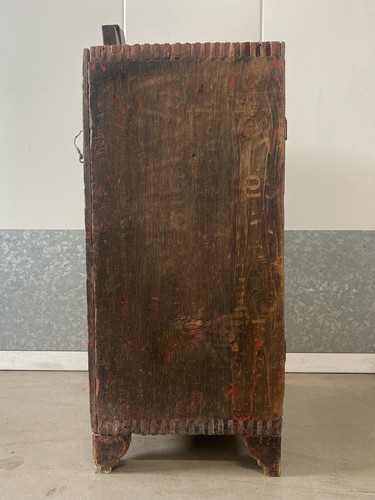
This is a wonderful and early Antique Old 19th c. American Folk Art Rustic Country Primitive Spice Cabinet, comprised of hand-hewn wood, some of which appears to be repurposed from old shipping crates of the era, carefully attached with numerous handmade notch cut tongue-and-groove joints, a similar but earlier variant of the dovetail joint, and a close variation of the shiplap joint. You can see various bits of writing on some of the wood slats, indicating their previous use as a commercial crate. It utilizes old brass joints and an iron pulley to open the cabinet door. This spice cabinet is quite sturdy, comprised of aromatic pine or cedar, and appears to be from the first half of the 19th century. There are speckles of old red paint and remnants of black paint as well, and it may have been previously painted a few times during its long life. Approximately 25 7/8 inches tall x 13 3/4 inches wide x 10 1/4 inches deep. The top shelf is 9 1/4 inches deep x 13 inches wide, and the bottom shelf is 9 5/8 inches deep x 13 inches wide. The small feet on the bottom are approximately 2 inches tall, and there is evidence that these feet may have been repaired or replaced at some time in the last 100 years (please see photo 23.) Acquired from an old collection in Los Angeles County, California, where this was found in the basement of an old home and was covered in an inch of dust and cobwebs. This beautiful and early spice cabinet likely dates to the 1840's - 1860's. Good condition for well over a century of age and storage, with some examples of wood splitting, edge wear, and paint loss throughout. If you like what you see, I encourage you to make an Offer. Please check out my other listings for more wonderful and unique artworks! About this Item: What is tongue and groove? How Does it Differ from Shiplap? Tongue and groove boards used in furniture look very similar to and give the same rustic look as shiplap, but tongue and groove is different from shiplap in the way the boards fit together.Tongue and groove boards include a piece with a tongue shape or extension that fits in a groove or slot and locks them together. One side of the board has a tongue and one side has a groove. Tongue and grove joints are used a lot for panel walls, flooring, doors and table tops. Tongue and groove joints used in wood furniture require extra work for the woodworker. They are a sign of quality craftsmanship. Shiplap boards have those rabbet joints we mentioned earlier that create a recess in the board. This allows them to overlap and lock together smoothly. The main difference is shiplap boards rest on top of each other in an overlapping pattern. Tongue and groove boards join together and interlock.