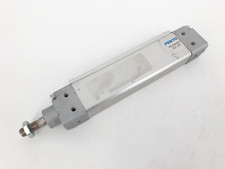
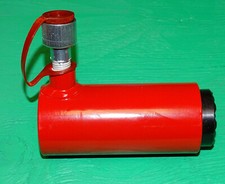
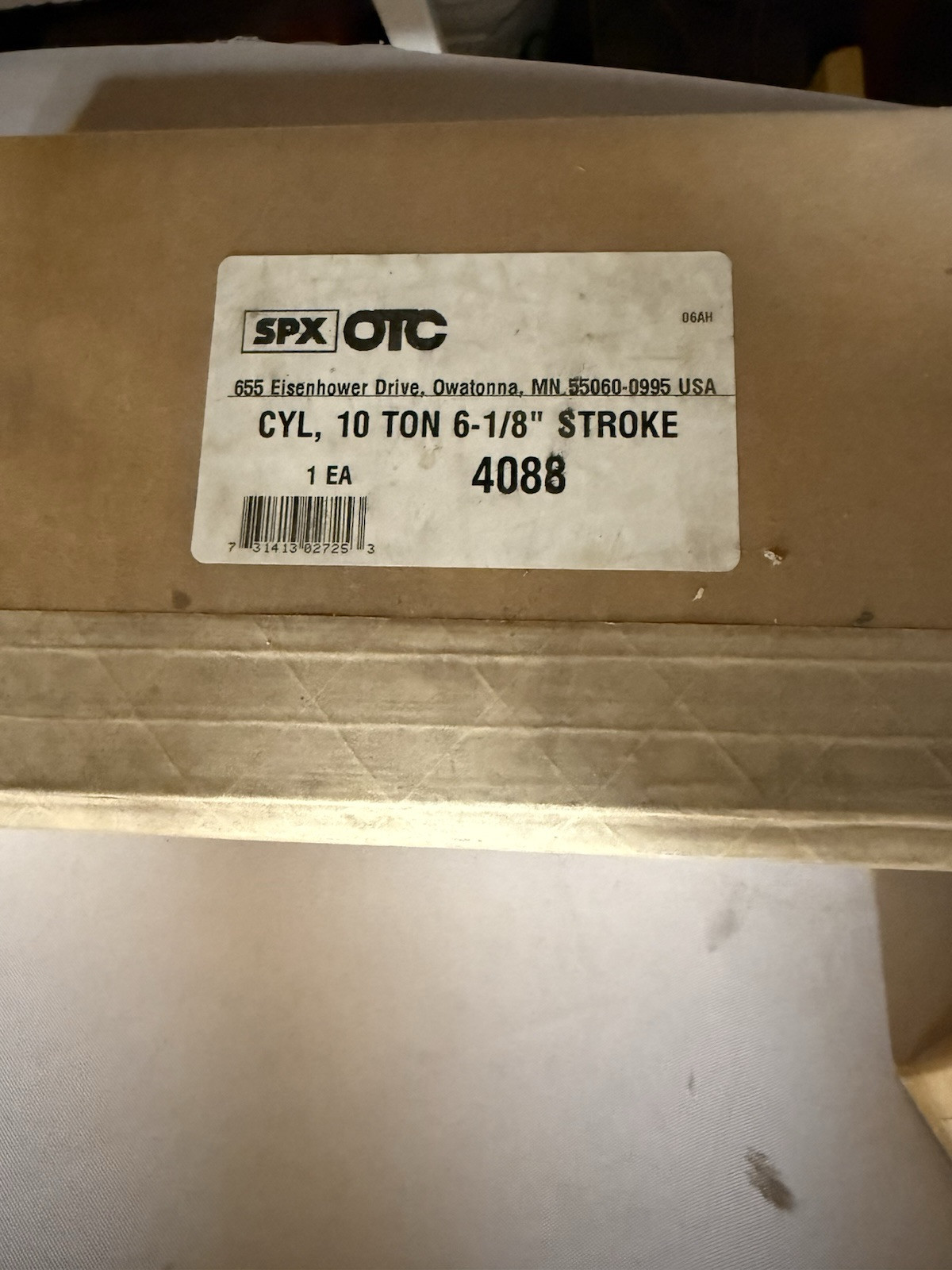
Hydraulic 10-Ton Single Acting Cylinder Ram, 6-1/8" stroke, OTC Tools #4088
Check the listing for details.


| Location | Duluth US |
| Shipping | Free shipping (check listing for details) |
| Seller |
djw77z28
100.0% positive · 387 feedback
|
| Listing | FixedPrice · Active |
| Start time | 2025-03-09T23:16:46.000Z |
| Brand | OTC |
| Suitable Media | Hydraulic Fluid |
| MPN | 4088 |
| Cylinder Action | Single-Acting |
This 10-ton single-acting cylinder ram from OTC Tools is the perfect addition to your hydraulic equipment collection. With a 6-1/8" stroke, it can handle all your heavy lifting needs. Suitable for use with hydraulic fluid, this cylinder is a reliable and efficient choice for any business or industrial setting.The OTC brand is known for its quality and durability, and this cylinder is no exception. Its single-acting design allows for easy operation and maintenance, while its sturdy construction ensures it can withstand even the toughest jobs. Whether you're in the construction industry or need reliable hydraulic equipment for your business, this cylinder ram is sure to meet your needs.SPX Corporation655 Eisenhower DriveOwatonna, MN 55060-0995 USAPhone: (507) 455-7000Tech. Services: (800) 533-6127Fax: (800) 955-8329Order Entry: (800) 533-6127Fax: (800) 283-8665International Sales: (507) 455-7290Fax: (507) 455-7063Operating Instructionsand Parts List for:40884089HYDRAULIC CYLINDERSAll cylinders are marked with maximum pressure settingSAFETY EXPLANATIONSTwo safety symbols are used to identify any action or lack of action that can cause personal injury. Yourreading and understanding of these safety symbols is very important.DANGER - Danger is used only when your action or lack or action will cause serious humaninjury or death.WARNING - Warning is used to describe any action or lack of action where a serious injurycan occur.IMPORTANT - Important is used when action or lack of action can cause equipment failure,either immediate or over a long period of time.WARNING: It is the operator's responsibility to read and understand the followingsafety statements,• Only qualified operators should install, operate, adjust, maintain, clean, repair, or transport thismachinery.• These components are designed for general use in normal environments. These componentsare not specifically designed for lifting and moving people, agri-food machinery, certain typesof mobile machinery or special work environments such as: explosive, flammable or corrosive.Only the user can decide the suitability of this machinery in these conditions or extremeenvironments. OTC will supply information necessary to help make these decisions.SINGLE-ACTING HYDRAULIC SYSTEMSA basic single-acting hydraulic system consists of a manual or power pump that moves the hydraulic fluid, a hydraulichose that carries the fluid, and a cylinder or ram that the fluid moves to do a job.TYPICAL INSTALLATIONCylinderGaugePumpSince the single-acting cylinders have only onehose going to the cylinder, the cylinder can onlyapply force to extend its rod. The return stroke isaccomplished by gravity or spring force.HydraulicHoseQuickCouplerSheet No. 1 of 5Rev. 1 Date: 4 Jan. 2000Litho in USAOperating Instructions and Parts List, Form No. 102755, Back sheet 1 of 5SAFETY PRECAUTIONSDANGER• When extending a cylinder or ram under load, always insure that the coupler(s) or portthread(s) has (have) not been damaged or do(es) not come in contact with any rigidobstruction. If this condition does occur, the coupler’s attaching threads may becomestripped or pulled from the cylinder or ram resulting in the instantaneous release of highpressure hydraulic fluid, flying objects, and loss of the load. All of these possible resultscould cause serious injury or death.• Avoid off-center loads which could damage the cylinder or ram and/or cause loss of theload, possibly causing serious injury or death.• Control the load at all times. Do not drop the load. Especially on locking collar cylinders orrams because the threads may shear and cause loss of the load.• Properly rated adapters must be installed and used correctly for each application.• Cylinders with weep hole stroke limiters will expel high pressure oil through the bleed holeto the atmosphere if extended beyond the visual maximum stroke indication. If this occurs,seals must be replaced.WARNING• All WARNING statements must be carefully observed to help prevent personal injury.Hydraulic Hoses and Fluid Transmission Lines• Before operating the pump, all hose connections must be tightened with the proper tools. Do notovertighten. Connections should only be tightened securely and leak-free. Overtightening can causepremature thread failure or high pressure fittings to split at pressures lower than their rated capacities.• Should a hydraulic hose ever rupture, burst, or need to be disconnected, immediately shut off the pumpand release all pressure. Never attempt to grasp a leaking pressurized hose with your hands. The forceof escaping hydraulic fluid could cause serious injury.• Do not subject the hose to potential hazard such as fire, sharp surfaces, extreme heat or cold, or heavyimpact. Do not allow the hose to kink, twist, curl, crush, cut, or bend so tightly that the fluid flow withinthe hose is blocked or reduced. Periodically inspect the hose for wear, because any of these conditionscan damage the hose and possibly result in personal injury.• Do not use the hose to move attached equipment. Stress can damage the hose and possibly causepersonal injury.• Hose material and coupler seals must be compatible with the hydraulic fluid used. Hoses also must notcome in contact with corrosive materials such as creosote-impregnated objects and some paints. Hosedeterioration due to corrosive materials can result in personal injury. Consult the manufacturer beforepainting a hose. Never paint a coupler.Operating Instructions and Parts List Form No. 102755SAFETY PRECAUTIONS (CONTINUED)LOADPinchPointCylinder• Use only approved
accessories and approved hydraulic fluid. Hoses, seals and all components used in asystem must be compatible with the hydraulic fluid used.• Do not exceed the rated capacities of the cylinders. Excess pressure can result in personal injury.• Inspect each cylinder and coupler before each use to prevent unsafe conditions from developing.• Do not use cylinders if they are damaged, altered or in poor condition.• Do not use cylinders with bent or damaged couplers or damaged port threads.• Under certain conditions, the use of an extension with a hydraulic cylindermay not be advisable and could present a dangerous condition.• Avoid pinch points or crush points that can be created by the load or parts ofthe cylinder.• If this component is used to lift or lower loads, be certain that the loadis under operator control at all times and that others are clear of the load.Do not drop the load.• As the load is lifted, use blocking and cribbing to guard against a falling load.• To help prevent personal injury, do not allow personnel to go under or work on a load before it isproperly cribbed or blocked. All personnel must be clear of the load before lowering.• Never use extreme heat to disassemble a hydraulic cylinder or ram. Metal fatigue and/or seal damage willresult and can lead to unsafe operating conditions.• The guide cannot cover every hazard or
situation so always do the job with SAFETY FIRST.IMPORTANT:• Keep the cylinder clean at all times.• When the cylinder is not in use, keep the piston rod fully retracted and upside down.• Use an approved, high-grade pipe thread sealant to seal all hydraulic connections. Teflon tape can beused if only one layer of tape is used and it is applied carefully (two threads back) to prevent the tapefrom being pinched by the coupler and broken off inside the pipe end. Any loose pieces of tape couldtravel through the system and obstruct the flow of fluid or cause jamming of precision-fit parts.• Always use protective covers on disconnected quick couplers.• When mounting cylinders or rams using the internal piston rod threads, collar threads, threaded tie rodsor base mounting holes, the threads must be fully engaged. Always use SAE grade 8 or better fastenerswhen attaching components to cylinders or rams and tighten securely.• Limiting the stroke on spring return cylinders will prolong spring life.Sheet No. 2 of 5Rev. 1 Date: 4 Jan. 2000Operating Instructions and Parts List, Form No. 102755, Back sheet 2 of 5INTRODUCTIONThese instructions are written to help you, the user, more effectively use and maintain your hydraulic cylinders. If anyquestions, please call your nearest OTC facility.Some of the information included in these instructions was selected from A.N.S.I. B30.1 and applies to theconstruction, installation, operation, inspection and maintenance of hydraulic cylinders. It is strongly recommendedthat you read A.N.S.I. B30.1 to answer any questions not covered in these instructions. The complete A.N.S.I. B30.1standard which contains additional information can be obtained at a nominal cost from the American Society ofMechanical Engineers, United Engineering Center, 345 East 47th, New York, New York 10017.An inspection checklist (Form No. 105503) is available on request from your nearest OTC facility.SYSTEM EVALUATIONYour cylinder, hose(s), couplings and pump all must be rated for the same maximum operating pressure, correctlyconnected and compatible with the hydraulic fluid used. An improperly matched system can cause the system to failand possibly cause serious injury. If you are in doubt, consult your nearest OTC facility.SET-UPHYDRAULIC CONNECTIONSRemove the thread protectors or dust covers from the hydraulic ports if applicable. Clean the areas around the fluidports of the pump and cylinder. Inspect all threads and fittings for signs of wear or damage, and replace as needed.Clean all hose ends, couplers and union ends. Connect all hose assemblies to the pump and cylinder. Use anapproved, high-grade pipe sealant to seal all hydraulic connections. Tighten securely and leak-free but do notovertighten.Hydraulic lines and fittings can act as restrictors as the cylinder or ram retracts. The restricting or slowing of the fluidflow causes back pressure that slows the cylinder’s or ram’s return. Return speed also varies because of theapplication, condition of the cylinder or ram, inside diameter of hose or fitting, length of the hose, and the temperatureand viscosity of the hydraulic fluid.CORRECTINCORRECTOperating Instructions and Parts List Form No. 102755SET UP (CONTINUED)BLEEDING THE SYSTEMAfter all connections are made, the hydraulic system must be bled of any trapped air. Refer to the diagram below.With no load on the system and the pump vented and positioned higher than the cylinder or ram, cycle the systemseveral times. If you are in doubt about venting your pump, read the operating instructions for your pump. Check thereservoir for possible low fluid level and fill to proper level with approved, compatible hydraulic fluid as necessary.IMPORTANT: Some spring return cylinders or rams have a cavity in the rod which forms an air pocket. Thistype of cylinder or ram should be bled when positioned upside down or lying on its side with the port facingupward.INSPECTIONBefore each use, visually inspect for the following items:1. Cracked or damaged cylinder2. Excessive wear, bending, damage, or insufficient thread engagement3. Leaking hydraulic fluid4. Scored or damaged piston rod5. Improperly functioning swivel heads and caps6. Loose bolts7. Damaged or improperly assembled accessory equipment8. Modified, welded, or altered equipment9. Bent or damaged couplers or port threadsPreventive Maintenance (yearly or sooner, if the cylinder or ram condition suggests damage) - Visual examinationby the operator or other designated personnel with a dated and signed equipment record.MAINTENANCE• Always use clean, approved hydraulic fluid and change as needed.• Any exposed threads (male or female) must be cleaned and lubricated regularly, and protected fromdamage.• If a cylinder or ram has been exposed to rain, snow, sand, grit-laden air, or any corrosive environment itmust be cleaned, lubricated, and protected immediately after exposure.PERIODIC CLEANINGA routine should be established to keep the hydraulic system as free from dirt as possible. All unused couplers mustbe sealed with dust covers. All hose connections must be free of dirt and grime. Any equipment attached to thecylinder must be kept clean. Use only OTC hydraulic fluid and change as recommended or sooner if the fluidbecomes contaminated (never exceed 300 hours).Sheet No. 3 of 5Rev. 1 Date: 4 Jan. 2000Operating Instructions and Parts List, Form No. 102755, Back sheet 3 of 5MAINTENANCE (CONTINUED)STORAGESingle-acting and Center Hole CylindersSingle-acting and center hole cylinders and rams should be stored in a vertical position with the rod end down in adry, well-protected area where they will not be exposed to corrosive vapors, dust or other harmful elements.When a single-acting cylinder or ram has not been used for a period of three (3) months it should be connected to apump and be fully extended and then retracted. This cycle will lubricate the cylinder walls thereby reducing thepotential for rust formation on the cylinder walls.TROUBLESHOOTING GUIDEIMPORTANT:• The following troubleshooting and repair procedures should be performed by qualifiedpersonnel familiar with this equipment. Use the proper equipment when troubleshooting!NOTE:• All the following statements may not apply to your particular model of cylinder or ram. Use theguide as a general reference for troubleshooting.PROBLEM CAUSE SOLUTIONErratic action1. Air in system or pump cavitation2. Internal leakage in double-actingcylinders or external leakage insingle-acting cylinders3. Cylinder sticking or bindingCylinder/Ram does not move1. Loose couplers2. Faulty coupler3. Improper pump valve position4. Low or no hydraulic fluid in pumpreservoir5. Air-locked pump6. Pump not operating7. Load is above the capacity of thesystem8. Fluid leaks out of rod end reliefvalve (double-acting cylinders only)1. Add fluid, bleed air and checkfor leaks2. Replace worn packings. Checkfor excessive contamination orwear. Replace contaminatedfluid as necessary.3. Check for dirt or leaks. Checkfor bent, misaligned, worn partsor defective packings.1. Tighten couplers2. Verify that female coupler is notlocked up (ball wedged intoseat). Replace both female andmale couplers.3. Close release valve or shift tonew position4. Fill and bleed the system5. Prime pump per pumpoperating instructions6. Check pump's operatinginstructions7. Use the correct equipment8. Make sure all couplers are fullycoupled. Contact your nearestAuthorized Hydraulic ServiceCenter.Operating Instructions and Parts List Form No. 102755TROUBLESHOOTING GUIDE (CONTINUED)PROBLEM CAUSE SOLUTIONCylinder/Ram extends only partially1. Pump reservoir is low on hydraulicfluid2. Load is above the capacity of thesystem3. Cylinder piston rod bindingCylinder/Ram moves slower thannormal1. Loose connection or coupler2. Restricted hydraulic line or fitting3. Pump not working correctly4. Cylinder seals leaking1. Fill and bleed the system2. Use the correct equipment3. Check for dirt or leaks. Checkfor bent, misaligned, worn partsor defective packings.1. Tighten2. Clean and replace if damaged3. Check pump operatinginstructions4. Replace worn seals. Check forexcessive contamination orwearCylinder/Ram moves but does notmaintain pressure1. Leaky connection2. Cylinder seals leaking3. Pump or valve malfunctioningCylinder/Ram leaks hydraulic fluid1. Worn or damaged seals2. Loose connections3. Rod end relief valve has activated(double-acting cylinders only)Cylinder/Ram will not retract orretracts slower than normal1. Pump release valve closed2. Loose couplers3. Blocked hydraulic lines4. Weak or broken retraction springs5. Cylinder damaged internally6. Pump reservoir too full1. Clean, reseal with threadsealant and tighten connection2. Replace worn seals. Check forexcessive contamination orwear. Replace contaminatedfluid as necessary.3. Check pump or valve operatinginstructions1. Replace worn seals. Check forexcessive contamination orwear. Replace contaminatedfluid as necessary.2. Clean, reseal with threadsealant and tighten connection3. Make sure all couplers are fullycoupled.a. If relief valve is still leaking,do not attempt to service thiscomponent. Contact yournearest Authorized HydraulicService Center.1. Open pump release valve2. Tighten couplers3. Clean and flush4. Send to service center for repair5. Send to service center for repair6. Drain hydraulic fluid to correctlevelSheet No. 4 of 5Rev. 1 Date: 4 Jan. 2000Operating Instructions and Parts List, Form No. 102755, Back sheet 4 of 5PARTS LISTSINGLE-ACTING, SPRING RETURNHYDRAULIC CYLINDERMaximum Capacity: 10 Ton At 8,950 PSI1411323412111056798Operating Instructions and Parts List Form