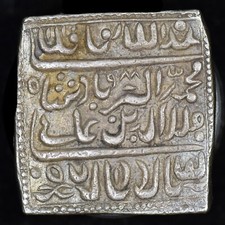
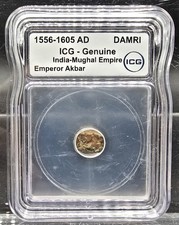
Mughal Emperor Akbar Silver Rupee Coin (1556-1605 AD), Circulated
This listing features a Mughal Emperor Akbar silver rupee coin dated to the 1556–1605 AD period. The coin shown in the photos is the exact coin for sale, and it is offered in circulated condition. Check the listing for details on year, mint, weight, diameter, and any visible marks or wear. Category: Coins & Paper Money. Free shipping is included with the purchase, and the item will be shipped after payment is confirmed.


| Location | Edison US |
| Shipping | Free shipping (check listing for details) |
| Seller |
a-fatf-ovjjzozuay
100.0% positive · 2310 feedback
|
| Listing | FixedPrice · Active |
| Start time | 2026-01-25T18:15:37.000Z |
| Circulated/Uncirculated | Circulated |
| Denomination | Rupee |
| Historical Period | Mughal |
| Composition | Silver |
| Fineness | 0.94 ? |
| Grade | Ungraded |
| Country of Origin | India |
| Certification | Uncertified |
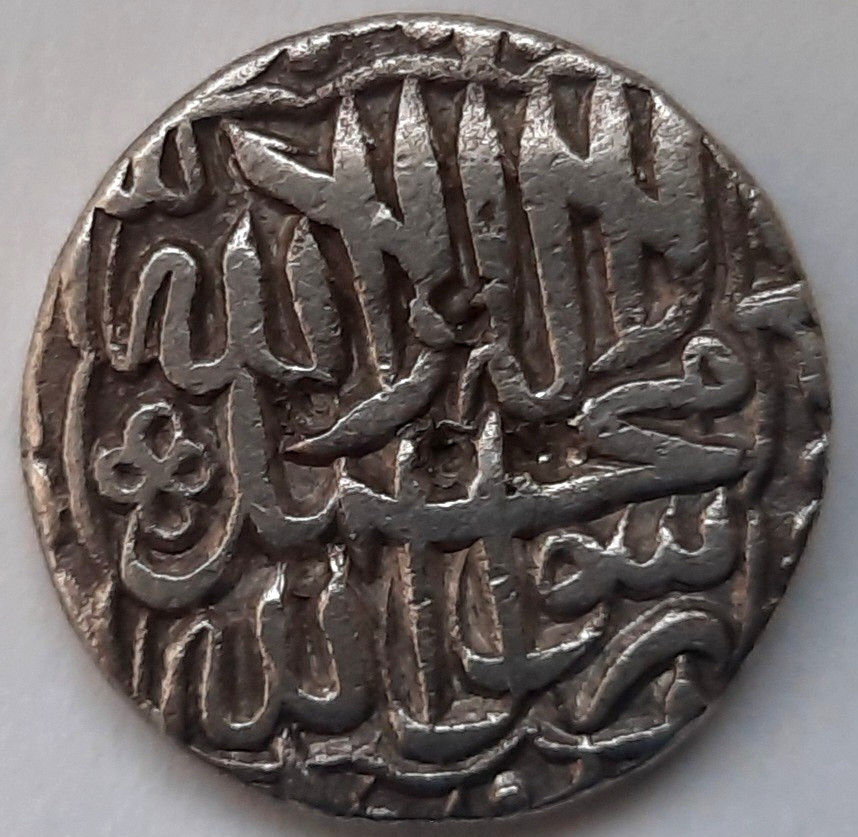
1 Rupee - Akbar AgraMughal Emperor "Akbar the great" Silver Rupee, more than 450 years old Coin.Please note:You will get the coin in photos.Photos were taken in daylight without help of any artificial light.Please inspect the coin.Shipping by USPS Ground Advantage. Handling time 01 Business Day.Return is not accepted if package is openedCombine Shipping discount available, $1.00 for each additional item. Please contact before you buy.If you don't contact no worries, your combine shipping discount will be refunded.Specifications:Issuer; Mughal Empire India.Emperor: Akbar (1556-1605)Type: Standard circulating coin.Years;975-986 AH (1568-1578 AD)Calendar: Islamic (Hijri).Value: 1 Rupee.Currency: Rupee (1540-1842) Composition: Silver.Weight: 11.34 gDiameter: 25 mm.History:Akbar (Jalal-ud-Din Muhammad Akbar, (15 October 1542 – 27 October 1605), also known as Akbar the Great, was the third Mughal Emperor, who reigned from 1556 to 1605. Akbar succeeded his father, Humayun, under a regent, Bairam Khan, who helped the young emperor expand and consolidate Mughal domains in the Indian subcontinent. He is generally considered one of the greatest emperors in Indian history and led a successful campaign to unify the various kingdoms of Hindustan or India proper.Akbar gradually enlarged the Mughal Empire to include much of the Indian subcontinent through Mughal military, political, cultural, and economic dominance. To unify the vast Mughal state, Akbar established a centralized system of administration and adopted a policy of conciliating conquered rulers through marriage and diplomacy. To preserve peace and order in a religiously and culturally diverse empire, he adopted policies that won him the support of his non-Muslim subjects, including abolishing the sectarian tax and appointing them to high civil and military posts.Under Akbar, Mughal India developed a strong and stable economy, which tripled in
size and wealth, leading to commercial expansion and greater patronage of an Indo-Persian culture. Akbar's courts at Delhi, Agra and Fatehpur Sikri attracted holy men of many faiths, poets, architects, and artisans, and became known as centers of the arts, letters, and learning. Timurid and Perso-Islamic culture began to merge and blend with indigenous Indian elements into a distinct style of Mughal arts, including painting and architecture. Disillusioned with orthodox Islam and perhaps hoping to bring about religious unity within his empire, Akbar promulgated Din-e-ilahi, a syncretic derived mainly from Islam and Hinduism as well as elements of Zoroastrianism and Christianity.Obverse:Script: ArabicObverse: Script: Arabic. Lettering: Kalima-e-Tayyab: La ilaha illallah Mohammad Rasool Allah.Translation: There is none worthy of worship except God (Allah) and Muhammad is the messenger of God.Reverse: Script: Arabic: Lettering: Jalal-al din Muhammad Akbar Badshah Ghazi.Translation:Glory of the faith, Emperor Muhammad Akbar, warrior against the infidel.Mint & Minting Technology:The minting technology employed for such coins was Die-Struck. "Dar-ul-Khilafat"The AH year is available on the reverse of the coin.Dar-ul-KhilafatWhen Humayun took the throne after Babur’s death in 1530, he gave Agra three names over the course of ten years: Dar-ul-Khilafat meaning ‘seat of government’, Dar-ul-Fath meaning ‘seat of conquest’ and Dar-ul-Aman meaning ‘seat of safety’.Interesting facts:As Akbar’s career was almost entirely spent on elephant-back, in one conquest or another, he made extensive use of a travelling mint. Living in a camp necessitated a mint inside that camp. The majority of coins issued in Mughal camps bear the mint name Urdu Zafar Qarin, literally meaning ‘camp associated with victory’. Thanks for your time and patience.