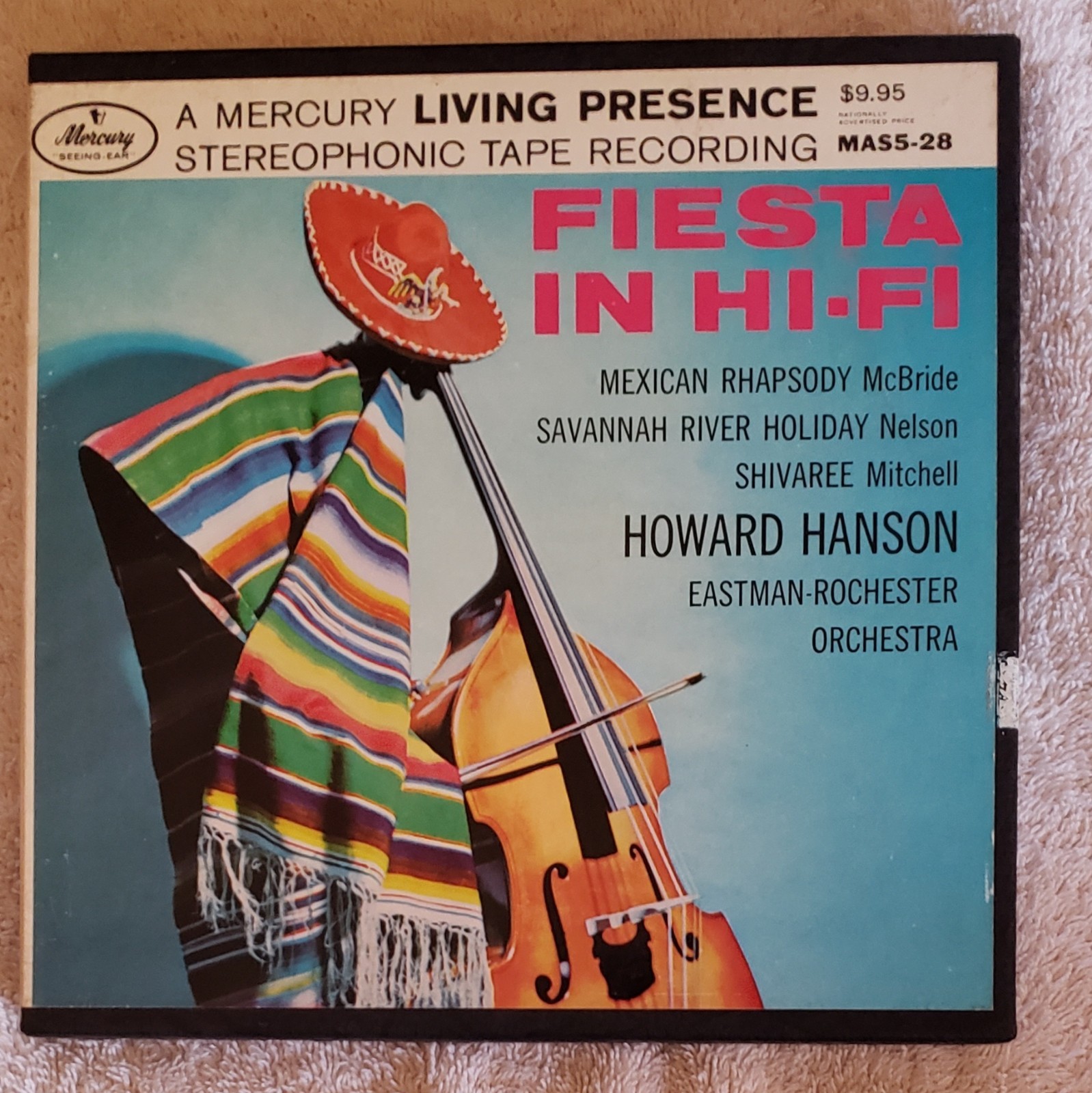
Fiesta in Hi-Fi Howard Hanson Orchestra 2-Track Mercury Stereo Reel Tape
Fiesta in Hi-Fi by the Howard Hanson Orchestra on Mercury stereo reel-to-reel tape, recorded in 2-track format. This item is listed in Like New condition and is a good option for collectors or listeners building a vintage tape library. Free Shipping is included with purchase. Check the listing for details on tape speed (such as 7 1/2 ips), included packaging, track information, and any playback or storage notes before ordering.


| Location | Lynbrook US |
| Shipping | Free shipping (check listing for details) |
| Seller |
msmeissen
97.7% positive · 1197 feedback
|
| Listing | FixedPrice · Active |
| Start time | 2026-03-17T13:53:18.000Z |
| Artist | Richard Hayman, Howard Hanson Eastman Rochester Orchestra |
| Record Label | Mercury |
| Release Title | Fiesta in HI-FI |
| Case Type | Cardboard Sleeve |
| Material | Celluloid |
| Edition | Living Presence |
| Type | Reel to Reel tape |
| Format | Reel-to-Reel Tape |
| Release Year | 1958 |
| Model | 7" reel 1/4" tape |
| Style | Mexican |
| Features | 2 channel For stacked In - Line Heads |
| Genre | Latin |
| Country of Origin | United States |
| Number of Audio Channels | Stereo |
Presnting a beautiful copy of a Fiesta In HI-FI / Howard Hanson Orchestra in a high quality 2 TRACK Stereo Reel to Reel Tape 7 1/2 ips format. Mercury LIVING PRESENCE The history of Mercury Records' "verified stereophonic" sound, specifically regarding reel-to-reel tapes, is tied directly to their pioneeringLiving Presenceseries in the 1950s and 60s, which were among the first high-fidelity commercial recordings to successfully transition from 35mm film and master tapes to consumer reel-to-reel formats. Development of the Technology 35mm Film Mastery:Unlike competitors who used 1/4-inch magnetic tape, Mercury engineers (led by Wilma Cozart Fine and C. Robert Fine) discovered that using 35mm cinematic film for recording reduced "print-through" and increased the frequency response and dynamic range. Three-Track Recording:Mercury utilized a three-track system (left, center, right) in the early 1950s, which provided superior balance and image depth for orchestral works. This was later mixed down to two-track for stereo reel-to-reel tapes. The "Living Presence" Sound:The recordings were verified as superior because of the use of a single microphone technique and high-speed (30 ips) 35mm recording, which reduced wow and flutter. Commercial Reel-to-Reel Tape History 1950s Introduction:Pre-recorded stereophonic open-reel tapes began in the mid-1950s, allowing audiophiles to access these high-fidelity recordings at home. 2-Track to 4-Track Transition:Early Mercury stereo tapes used a two-track ("stacked") format. By the late 1950s, the industry moved to four-track heads, allowing for two stereo tracks on each side of the tape (quarter-track). Tape Releases:Mercury (often distributed byAmpex) released many high-quality reel tapes during the late 50s and 60s, including significant classical repertoire (e.g., Tchaikovsky's 4 Suites for Orchestra) at 7.5 ips. Legacy These tapes were considered the ultimate analog source, as they were often duplicated at high speeds directly from the 35mm or 1/4-inch master tapes, providing a closer experience to the "live" studio session than vinyl. The "Verified" or "Living Presence" sound remains highly respected for its accuracy and stereo imaging today.
![Simon & Garfunkel - Bookends [New SACD]](https://i.ebayimg.com/images/g/jk4AAeSwolZpHeVM/s-l225.jpg)