Simon Willard Jr S Willard & Son Mahogany Banjo Clock, Runs
This used Simon Willard Jr (S Willard & Son) Boston mahogany banjo clock is listed as running and offered in the Collectibles category. It’s a suitable option for buyers looking for an early American wall clock from the 1830s era. No additional description is provided, so check the listing for details on dimensions, materials, movement type, restoration history, and any wear, repairs, or missing parts. Price is $5,500 USD. Free shipping is included; check the listing for handling time, carrier, packaging, and return policy.







| Location | Boca Raton US |
| Shipping | Free shipping (check listing for details) |
| Seller |
ecmlibrary
99.8% positive · 3230 feedback
|
| Listing | FixedPrice · Active |
| Start time | 2025-12-06T00:06:05.000Z |
| Material | Mahogany |
| Shape | Banjo |
| Character | Simon |
| Origin | Boston, Massachusetts, USA |
| Antique | Yes |
| Movement | Mechanical |
| Signed | Yes |
| Color | Brown |
| Year Manufactured | 1830’s - 1840’s |
| Franchise | Williard Banjo Clock |
| Brand | Simon Willard, Jr and His Son, Zabdiel Willard |
| Chime Sequence | No Chimes |
| Type | Wall Clock |
| Display Type | Analog |
| Era | Victorian (1837-1900) |
| Style | 1830’s - 1840’s Wall Banjo Clock |
| Frame Material | Wood |
| Original/Reproduction | Original |
| Time Period Manufactured | 1800-1849 |
| Room | Any Room |
| Country of Origin | United States |
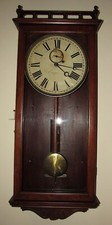
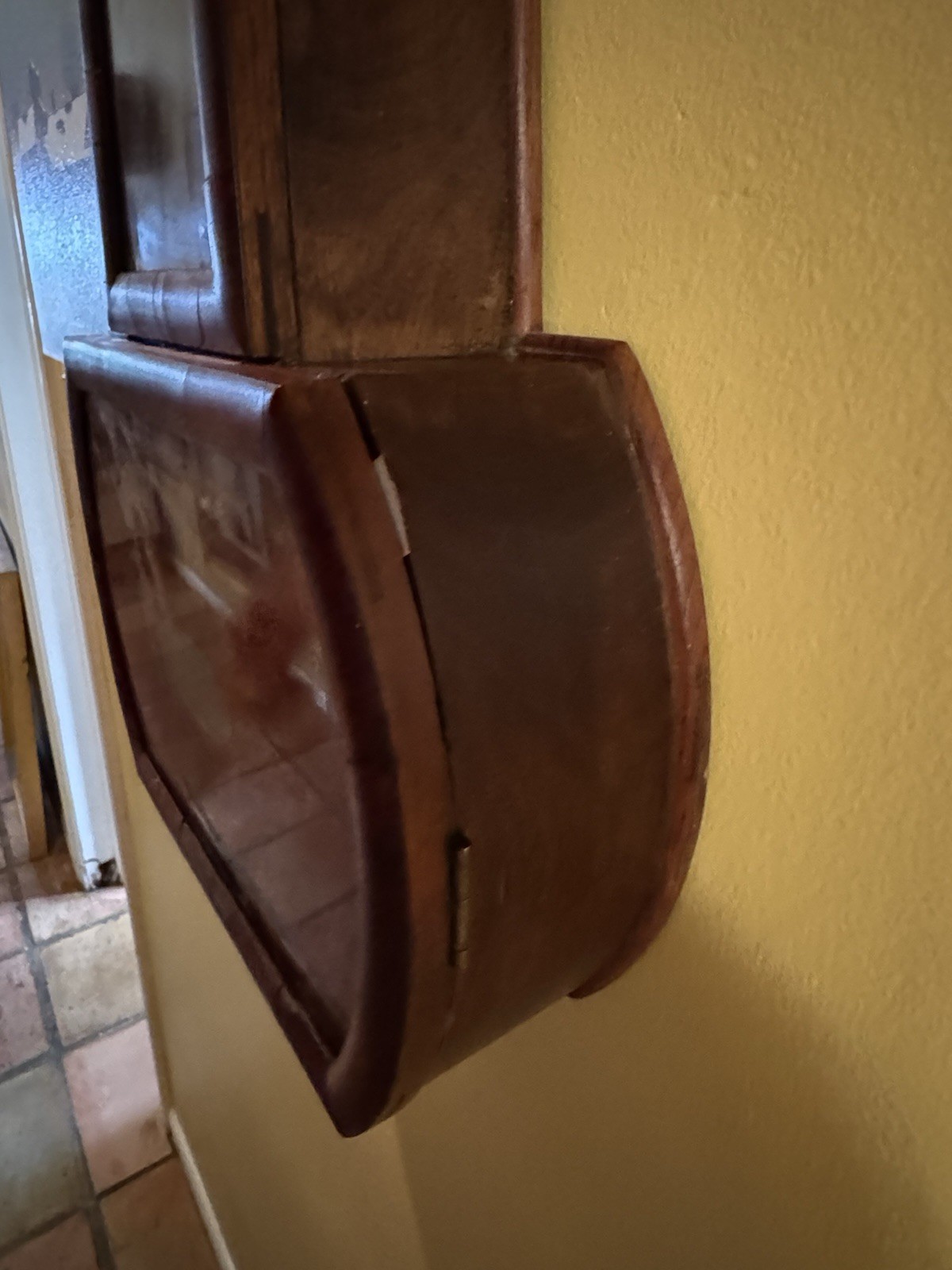
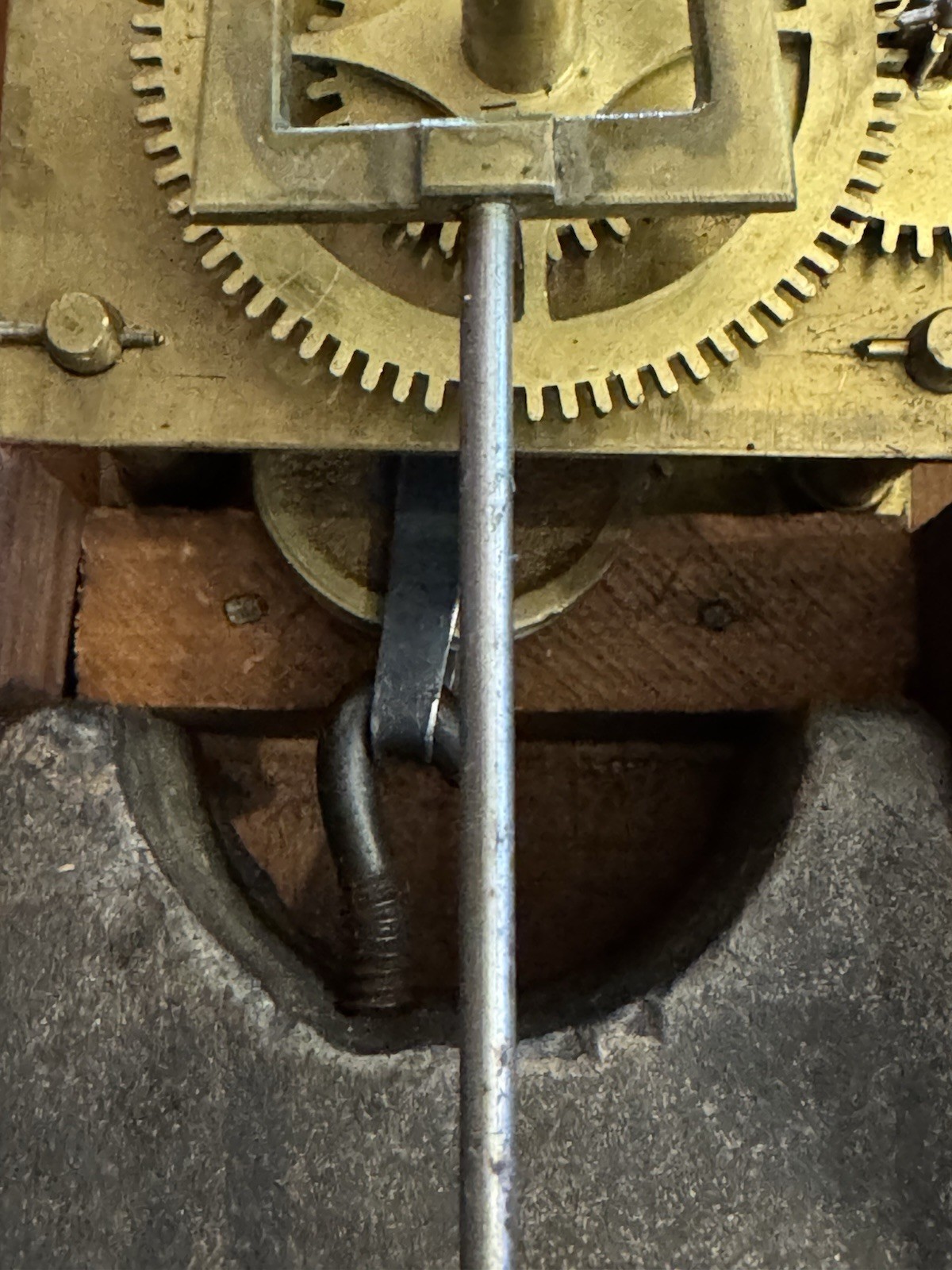
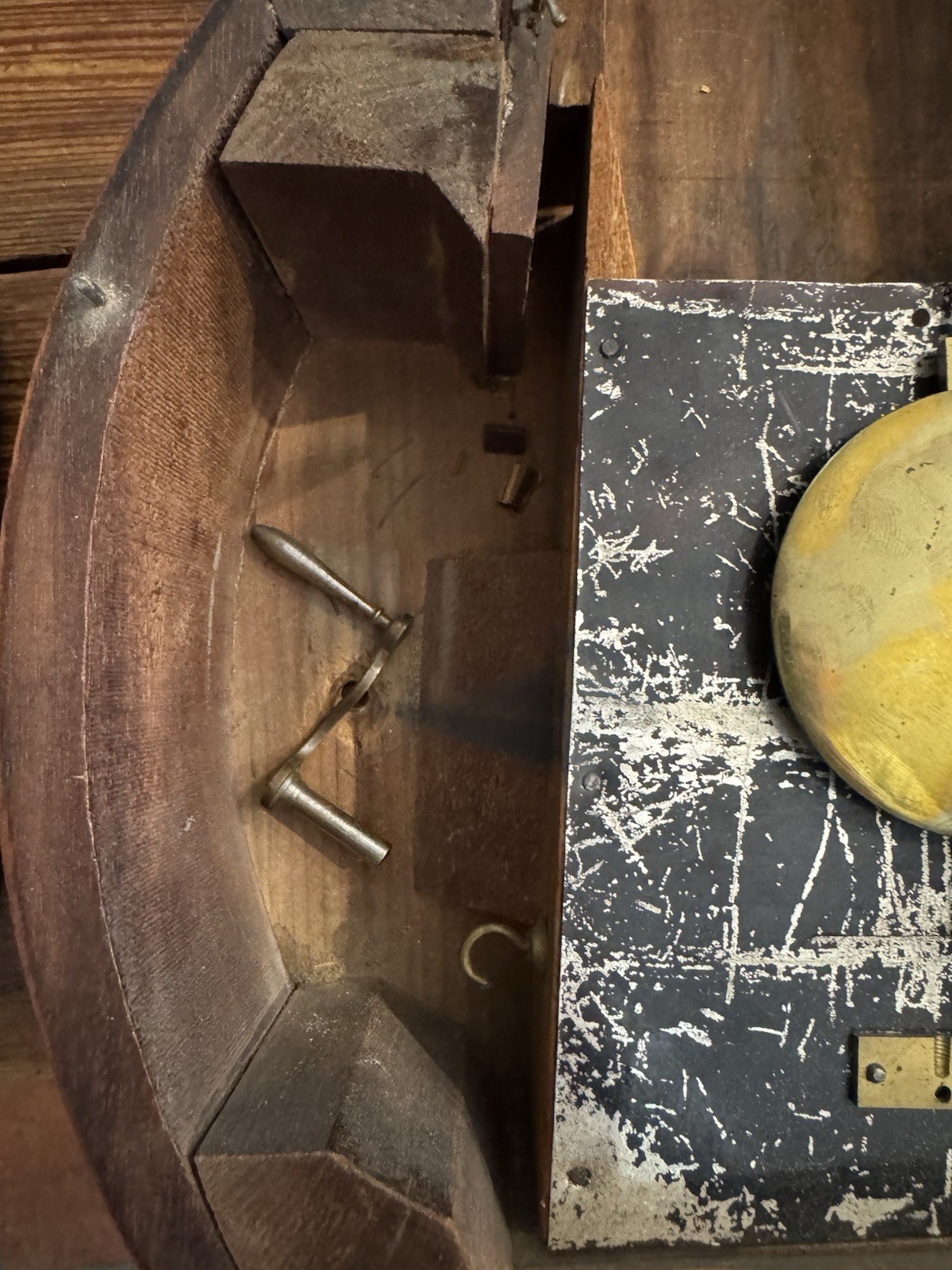
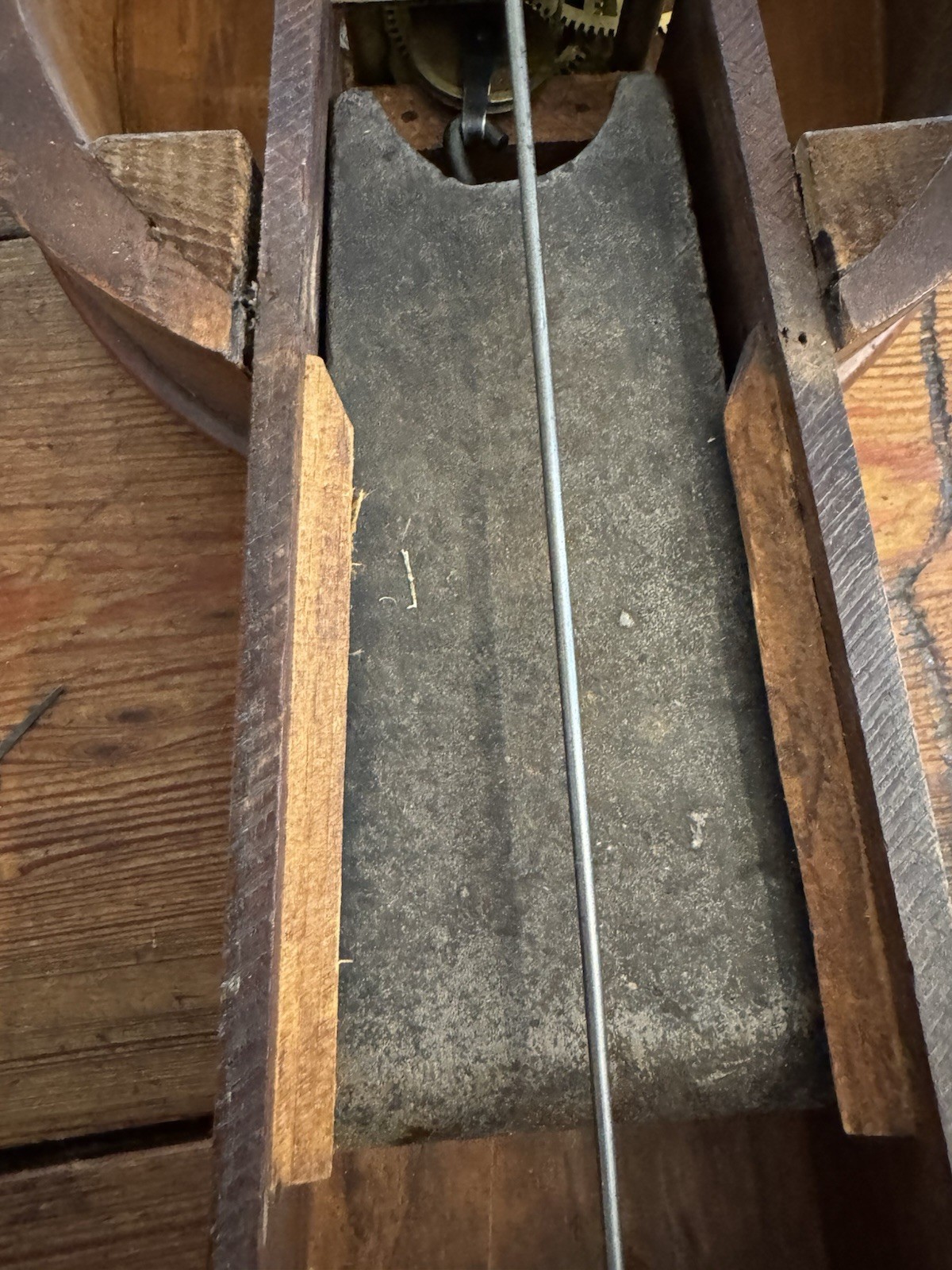
Mahogany Banjo Clock made by Simon Willard Jr and his son. There were two “Simon Willard and Son” partnerships: one with Simon Willard and his son Simon Willard Jr., that was active from the 1820s to 1830s, and the second iteration was formed by Simon Willard Jr. and his son, Zabdiel Willard (S. Willard & Son) which was active from the 1830s-1850s. Foley in his book “Willard’s Patent Time pieces” describes these partnerships on pages 41, 45, 176, 334 and also “Simon Willard and his clocks”, 1911 edition at p. 110.We believe this is from the second partnership. Probably from the late 1830’s - 1850’s. Made in Boston. The movement has “10/32/31e” inscribed on front plate by either an inspectors/apprentice or a later clock repairer. It’s marked “Ru 1284” on back of dial and “ no or Ru1284” on back of glass. There may be other marks we couldn’t find. The hardware all appears to be original, except the bolts on the back plate of the movement.This was recently obtained from an estate in Florida, and has not been fully restored. However, it is in good overall original condition. The bottom glass panel is broken but the two bottom pieces in that panel have been held in place with small wedge pieces so that the glass doesn’t look broken at first glance. We are not sure whether these glass panels are original, it appears to be a mahogany simulated pattern painted on the back of the glass. The key we believe is original as well but again, not sure.It’s about 28.5” long from bottom to the top of the wood case, not including the final on top. Simpler clocks like this were more prevalent in the latter 1820-1850s. Although some restoration could be done, it isn’t necessary for this extraordinary clock to undergo any work if someone merely wants to hang it on the wall now. However, the cracked glass in the pendulum box may have to be situated better. Although the bottom glass panel could be replaced, we have it running on the wall and overall the clock looks great and it’s keeping good time. Rare piece of working early Americana. Will ship promptly and carefully and is available for local pickup in South Florida.