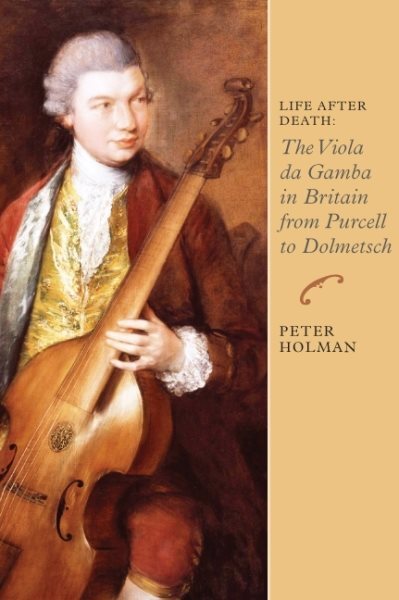
Life After Death: The Viola da Gamba in Britain Book, Free Shipping
Life After Death: The Viola da Gamba in Britain from Purcell to Dolmetsch is a brand-new book listed in Books & Magazines. This title is suitable for readers looking for historical coverage of the viola da gamba in Britain; check the listing for details on edition, author, publication date, and contents. The item ships with free shipping, and the price shown is 168.04 USD. Review the listing for any additional terms, including handling time, packaging, and return policy.
| Location | Jessup US |
| Shipping | Free shipping (check listing for details) |
| Seller |
greatbookprices1
96.4% positive · 327654 feedback
|
| Listing | FixedPrice · Active |
| Start time | 2024-03-04T22:55:01.000Z |
| Book Title | Life After Death : The Viola da Gamba in Britain from Purcell to |
| ISBN | 9781843835745 |
| Subject Area | Music |
| Publication Name | Life after Death: the Viola Da Gamba in Britain from Purcell to Dolmetsch |
| Publisher | Boydell & Brewer, The Limited |
| Item Length | 9.4 in |
| Subject | History & Criticism, Musical Instruments / Strings, Ethnic |
| Publication Year | 2010 |
| Series | Issn Ser. |
| Type | Textbook |
| Format | Hardcover |
| Language | English |
| Item Height | 1.2 in |
| Author | Peter Holman |
| Item Weight | 28.4 Oz |
| Item Width | 6.5 in |
| Number of Pages | 432 Pages |
Life After Death : The Viola da Gamba in Britain from Purcell to Dolmetsch, Hardcover by Holman, Peter, ISBN 1843835746, ISBN-13 9781843835745,
Brand New, Free shipping in the US"It is normally thought that the bass viol or viola da gamba dropped out of British musical life in the 1690s, and that Henry Purcell was the last composer to write for it. Peter Holman shows how the gamba changed its role and function in the Restorationperiod under the influence of foreign music and musicians; how it was played and composed for by the circle of immigrant musicians around Handel; how it was part of the fashion for exotic instruments in the middle of the century; and how the presence in London of its greatest eighteenth-century exponent, Charles Frederick Abel, sparked off a revival in the 1760s and 70s. Later chapters investigate the gamba's role as an emblem of sensibility among aristocrats, artists, and intellectuals, including the Countess of Pembroke, Sir Edward Walpole, Ann Ford, Laurence Sterne, Thomas Gainsborough and Benjamin Franklin, and trace Abel's influence and legacy far into the nineteenth century. A concluding chapter is concerned with its role in the developing early music movement, culminating with Arnold Dolmetsch's first London concerts with old instruments in 1890."--Publisher's website.