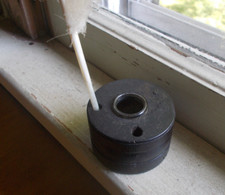
E. Waters Troy NY 1840s Stampless Folded Letter Invoice - Pontil Ink Bottle
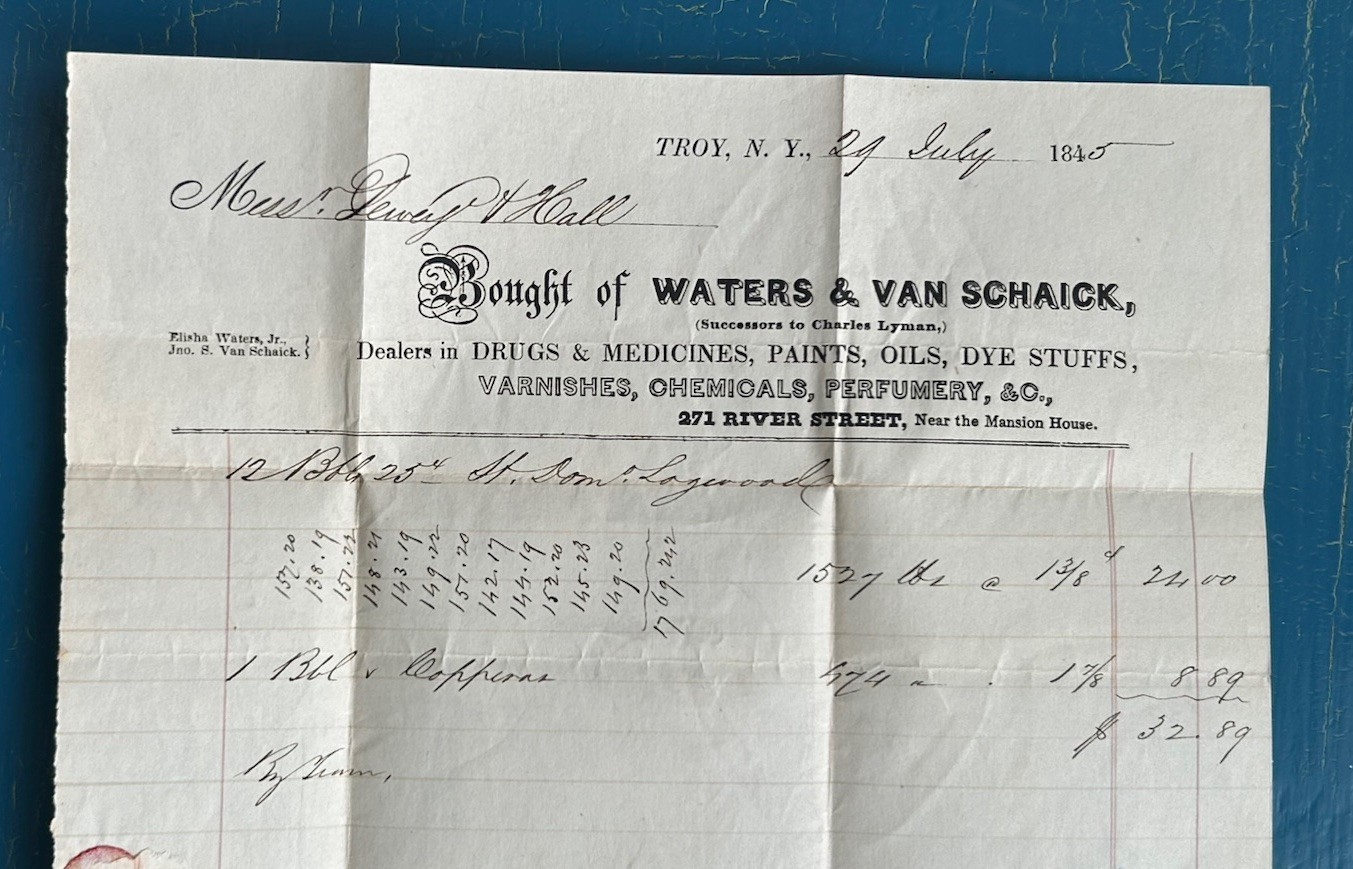
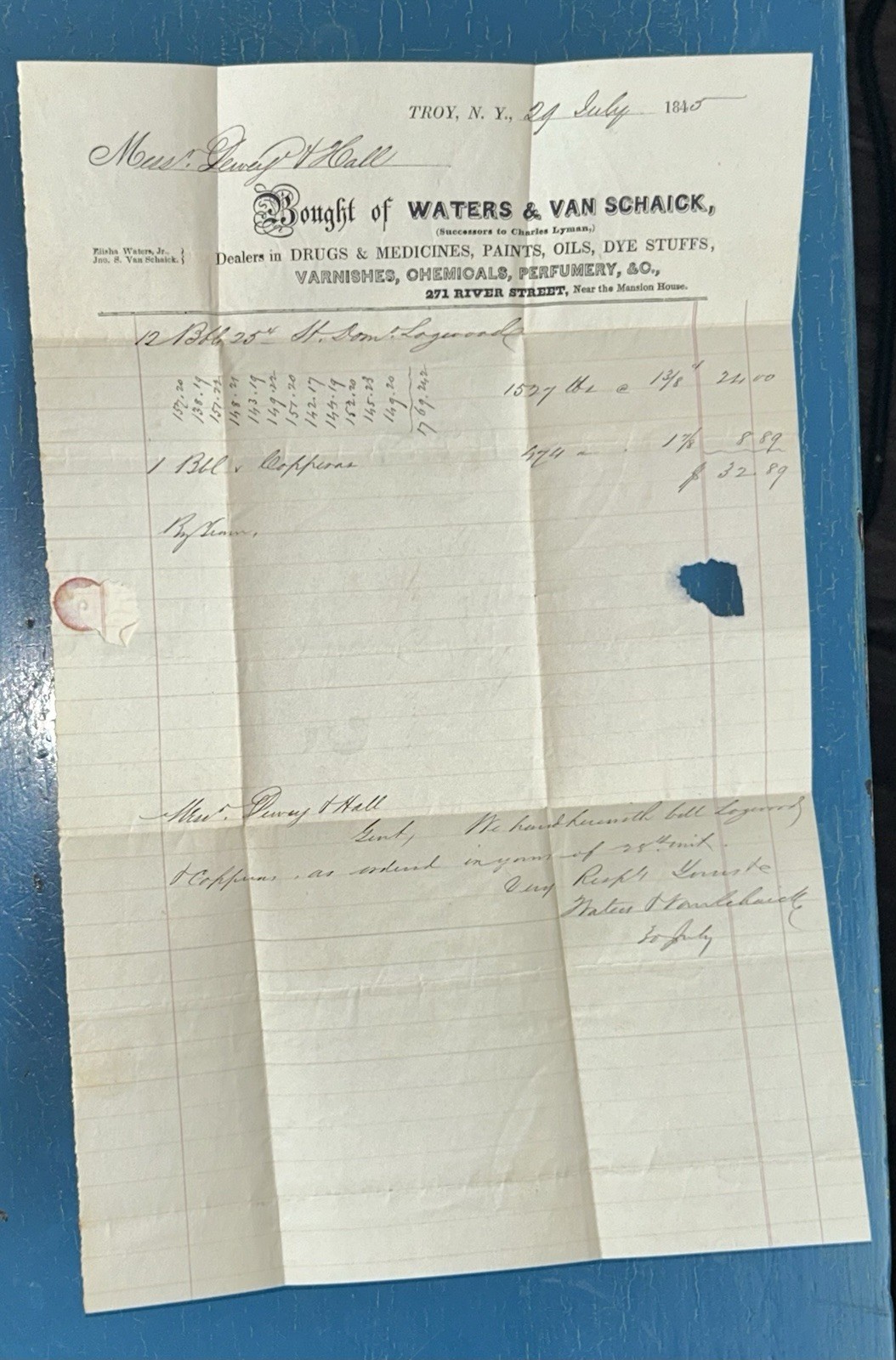
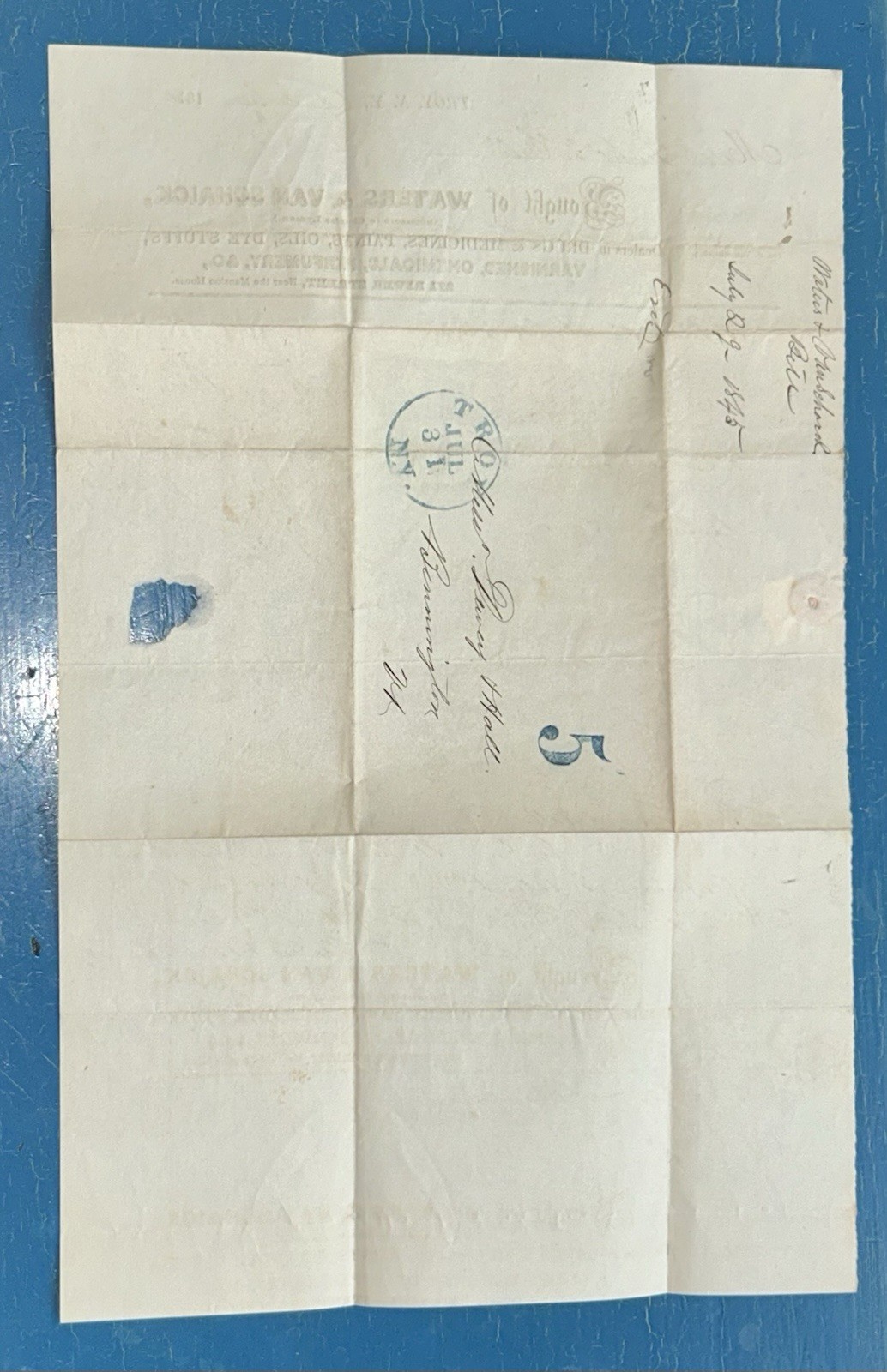
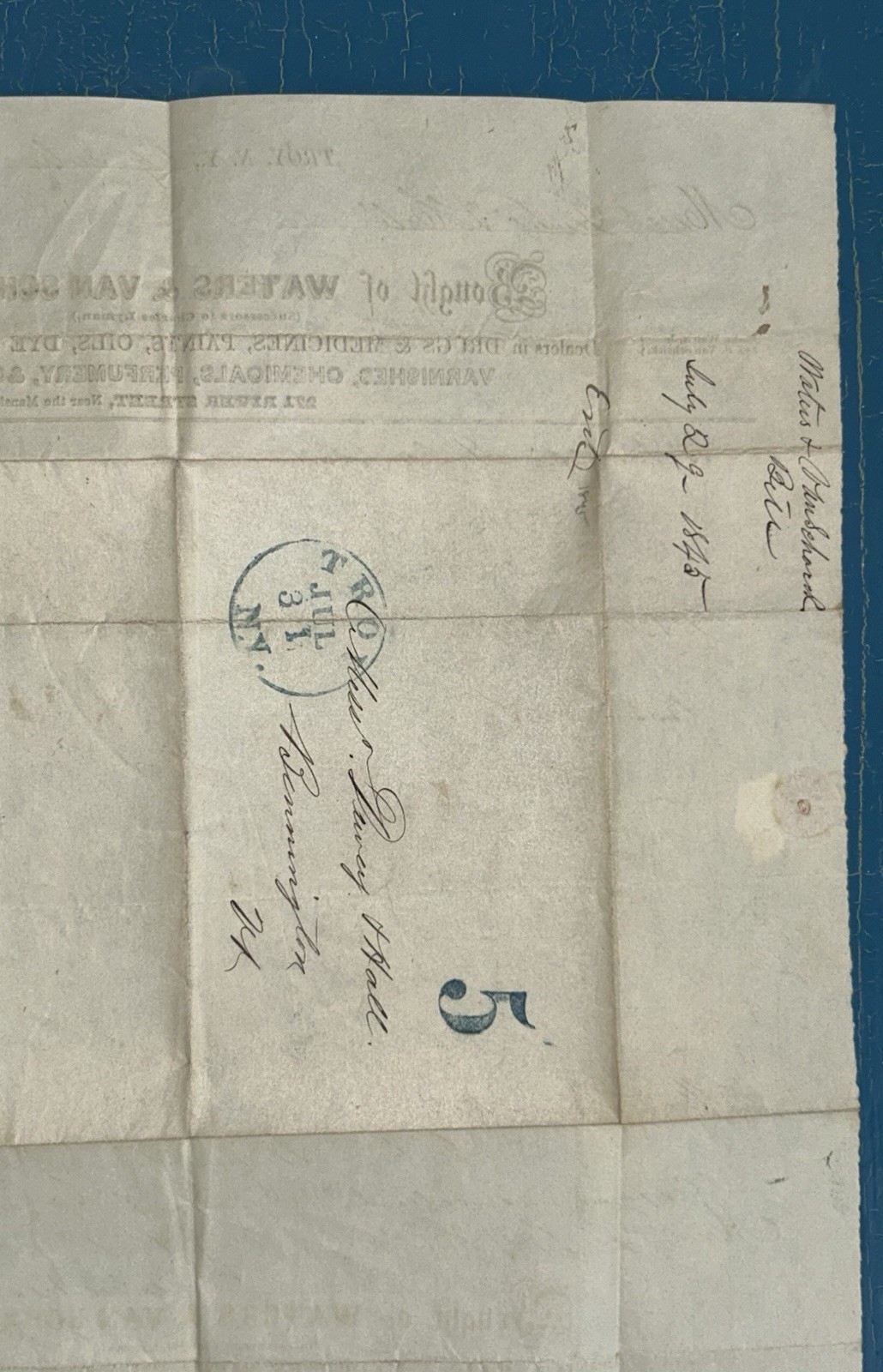
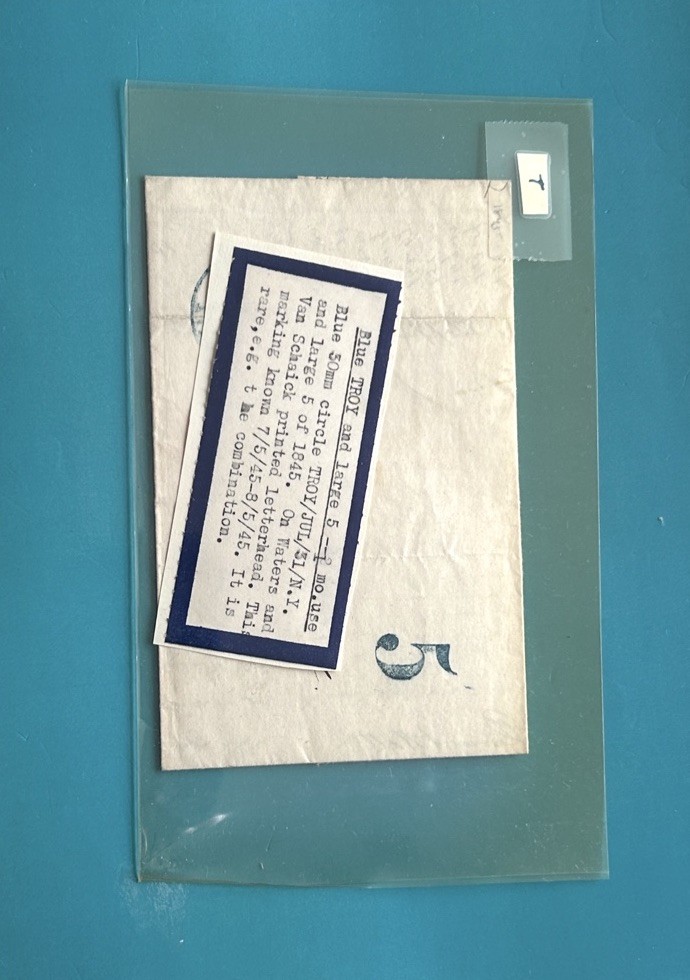
This collectible 1840s stampless folded letter features an invoice related to a pontil ink bottle from E. Waters, Troy, NY. Condition is original estate antique: clean overall with expected age toning and moderate handling. There is a minor wax-seal tear from opening, described as not significantly compromising the document’s integrity. No noted markings, strikes, impacts, or moisture issues. It is suitable for framing (check the listing for details on size and contents). Free shipping is included, and the document is shipped in a rigid plastic holder for protection.










| Location | Hyannis US |
| Shipping | Free shipping (check listing for details) |
| Seller |
bottleboyrobert
99.7% positive · 5185 feedback
|
| Listing | FixedPrice · Active |
| Start time | 2025-10-10T11:23:33.000Z |
| Country of Origin | United States |
| Bottle Type | Ink |
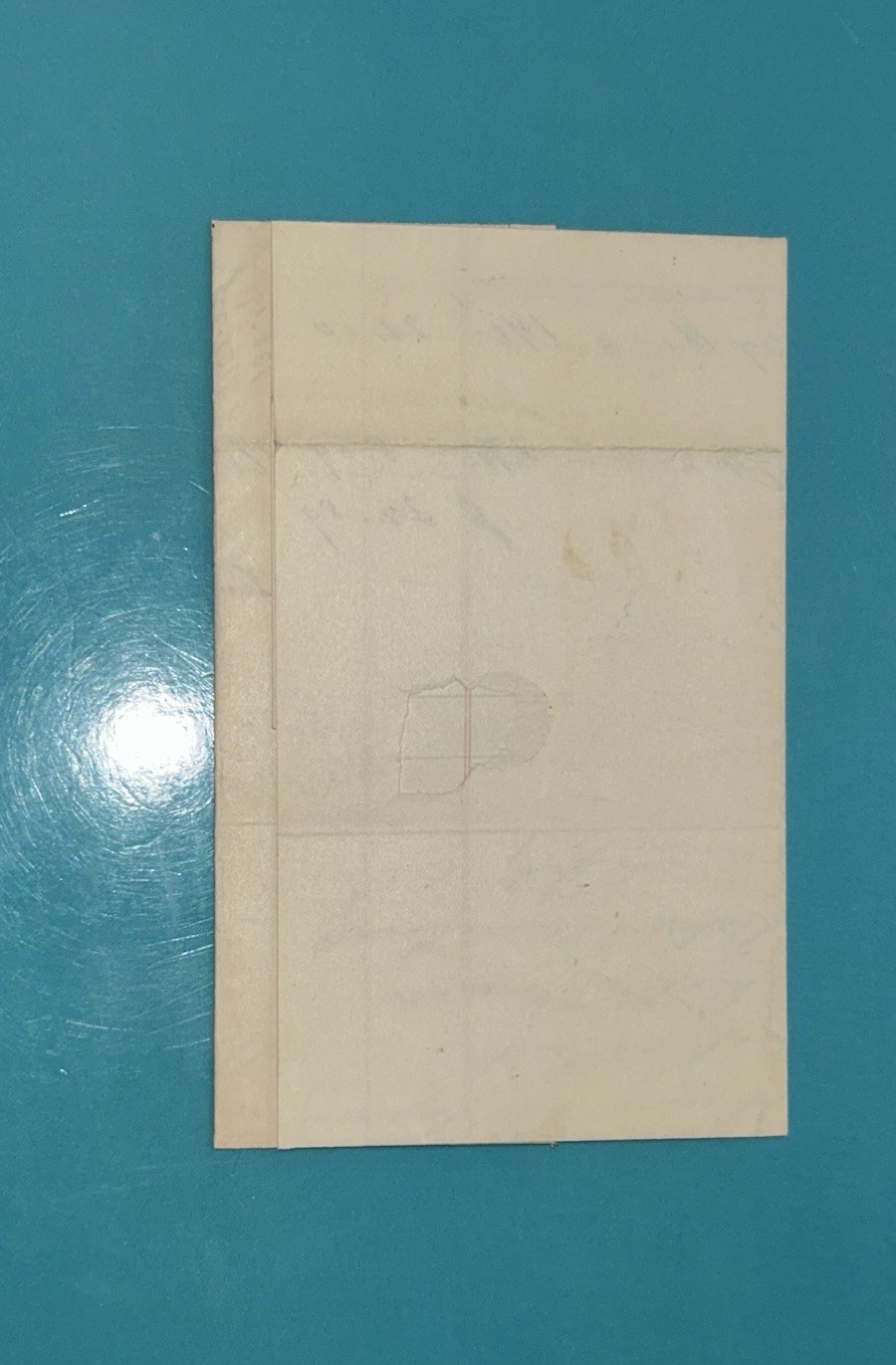
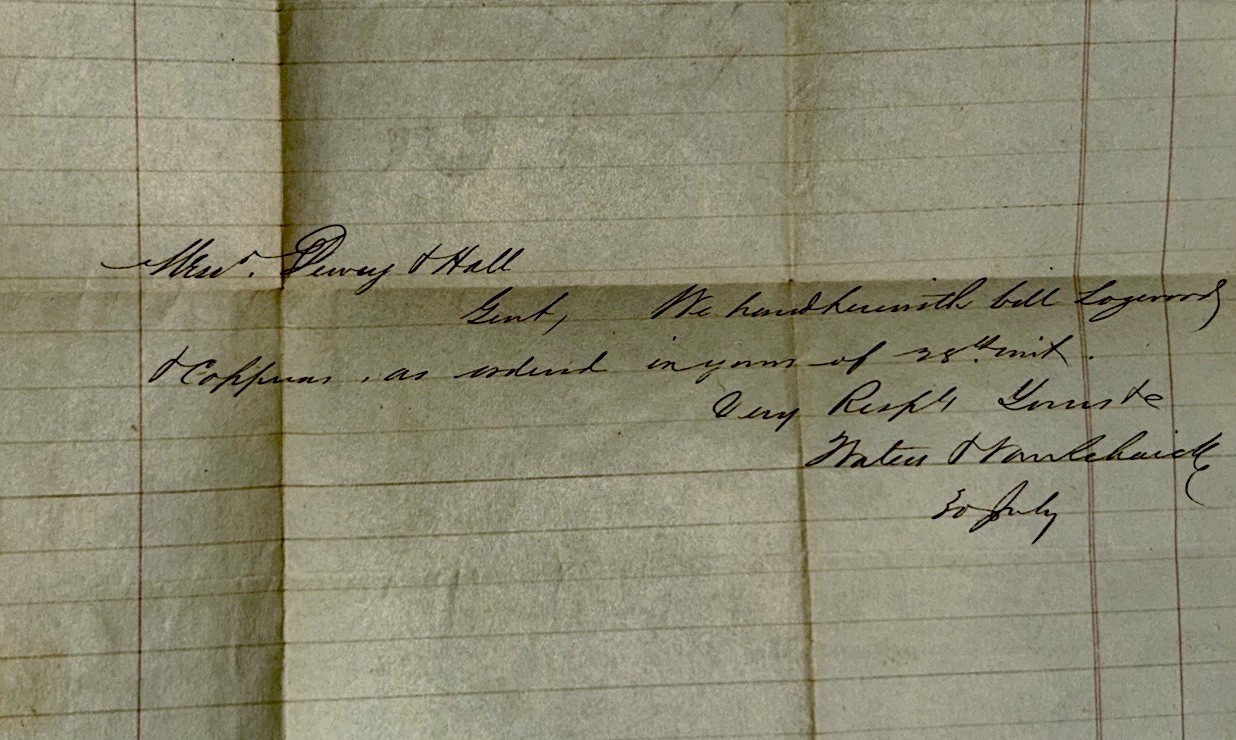
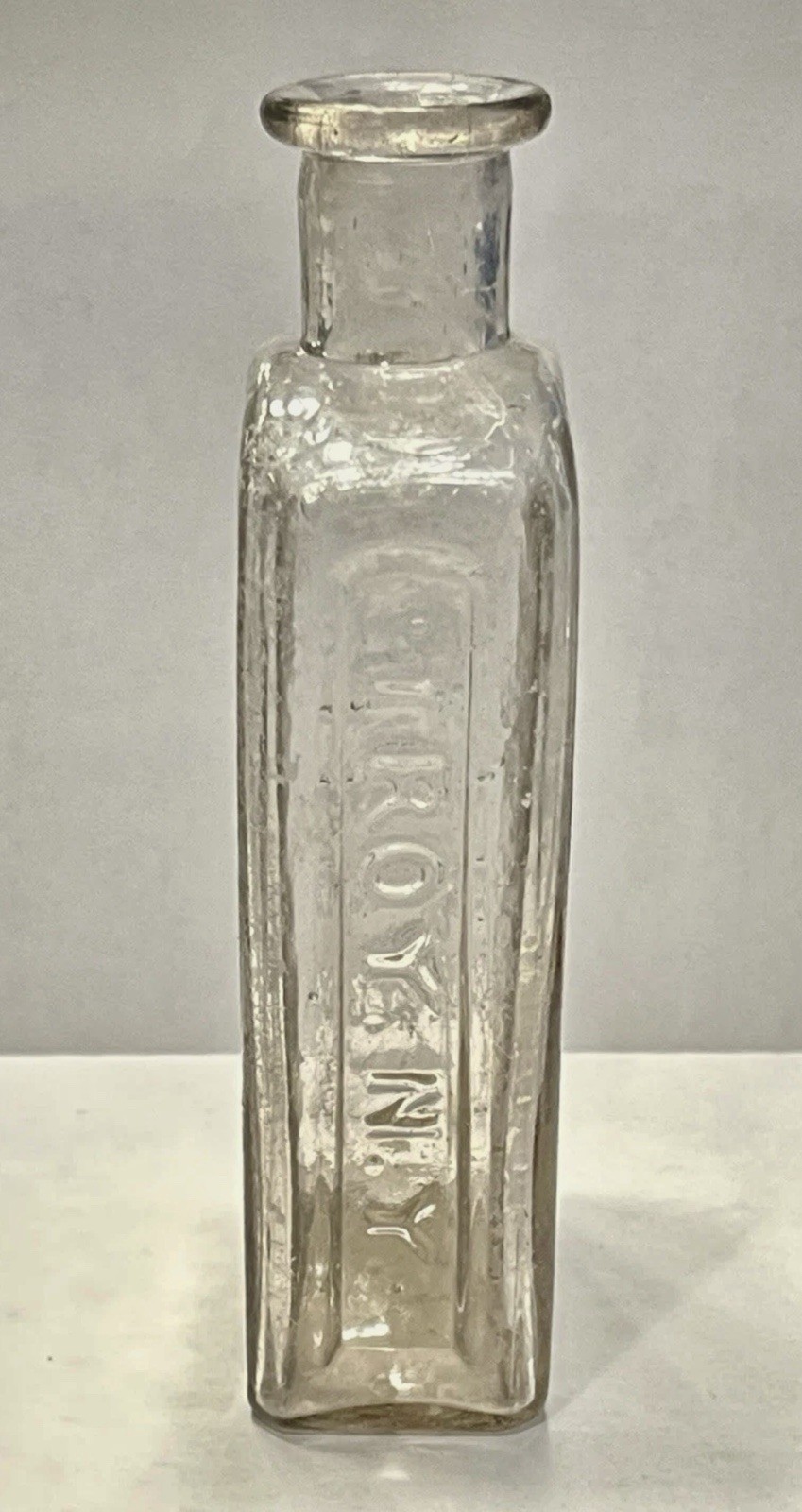
Here Offered, in an Ultra-Rare, Early 19th. Century, American “Writing-Ink” Merchant’s Business Invoice, as Sent to a Customer in the Form of a “Stampless-Folded-Letter”. The Folded-Document Features Hand-Quill-Pen-Scrawled Writing that Designates the Addressee as: “Messengers Dewey + Hall - Bennington, Vermont” A Circular Postal-Cancellation Reads “TROY NY - July, 31”The Document Features Early-Style Printed Graphics and Text Reading: “ Troy N.Y. ~ 29th. July 1845 Mess. Dewey + Hall Bought of WATERS & VAN SCHAICK (Successors to Charles Lyman)Elijah Waters Jr.Jno. S. VanSchaick DEALERS IN DRUGS & MEDICINES, PAINTS, OILS, DYE-STUFFS, VARNISHES, CHEMICALS, PERFUMERY 271 RIVER STREET (Near the Mansion House) 12 BBLS St. Dom. Logwood - 1527 Pounds @1 3/8 Cents - $21.00 1-BBL Copperas - 474 Oz. @1 7/8 - 8.89 $32.89 (By Team) Mess. Dewey + Hall We Herewith Bill Logwood + Copperas, as Ordered in Yours (Letter) of the 28th. Very Respectfully Yours Waters & Van Schaick 30 July” +++++CONDITION: The Antique Document is in Nice but Lightly “Handled”, Original Antique "Estate" Condition ~ NO FORMS OF "DAMAGE" OR "ISSUES"…..NO "MARKINGS", NO STRIKES OR "IMPACTS", NO WATER OR "MOISTURE-CONTACT-ISSUES".There is a Natural “Wax-Seal - Tear” that Occurred while the Early Folded-Letter was Being “Opened” by the Addressee. This is Minor and Not Significantly Compromising to the Integrity of the Document…… There is some Natural, “Age-Toning” and Some Indications of Age-Related , Moderate “Handling”The Document would be Easily "Framed" for Display. Overall The Document is Very Clean + Very Nice ~ !!!!!!+++++As Always, This Original Antique Paper-Item is Presently Stored and is "Shipped-to-You" within a "Rigid-Plastic-Holder" for the Utmost Protection During the Shipping Process.*********The Antique E.Waters Ink and “Water’s Pulmonica” Bottles…..that appear in the Last Several “Photos” In This Listing, are NOT FOR SALE….In This Sale-Listing, Which Is Solely For the Sale of the “E.Water’s Druggist” Merchant-Invoice” that is Displayed in all of the Listing’s Previous Photos*******+++++++ The Folded-Letter Dates to Pre-1850's America, Where the Innovation of the Printed "Postal-Stamp" was a New Thing and Not Seen Very Often. Business and Personal Written-Correspondence, was "Penned / Writing-Ink-Scrawled" Upon Thick and Heavy "Parchment-Style" Paper, and "Folded" In Order to Have the Addressee and Shipping-Destination Written Upon the Front-Side of the Document. "Postage-Dues" were then Added by a Local "Post-Master" who Marked the Paper with Hand-Stamped or Penned Fee-Amounts, and Stamped "Cancelations" were Added to the Front-Side of the Letters. +++++++ LOGWOOD The logwood tree (Haematoxylum campechianum) is a valuable hardwood native to southern Mexico and Central America, historically known for producing a potent dye from its red heartwood, which was sought after by Europeans and even led to piracy in the 17th century. Beyond its use in creating black, blue, and purple dyes for textiles, logwood also has various medicinal applications, such as for diarrhea, and its hard wood is used for small projects and construction COPPERAS (Mineral native to USA)By the early 1800s, the term “copperas” was fading away, being replaced by more accurate chemical terminology. Confusingly, there was a family of sulfates sold under this rubric–”white copperas” (zinc), “blue copperas” (copper), and “green copperas” (iron) being the most common. Simply “copperas” probably meant a mixture of green and blue, with the green predominating. Iron sulfate (vitriol of iron) was commonly prescribed at the time as a tonic or as an agent against intestinal worms. A chemical with a wide variety of uses, copperas was an ingredient in permanent ink, which may have been the reason for the large amount purchased by Writing-Ink Supplying “Druggists” of the 19th. Century. ELISHA WATERS (Peachridge Glass) ++++++Elisha Waters was born in Bennington, Vermont, in 1815. He was educated in the public schools of Bennington but moved with his parents to Troy, New York, in 1831. Shortly after that, Elisha entered the employ of Oliver C. Hull, a druggist on River Street. When Mr. Hull moved to New York City, Waters got a job with Fassett and Selden, another well-known drug company in Troy. He was such a hard worker that the owners, offering their support, advised him to start his own business when he turned twenty-one.At first, Elisha Waters planned to head west to Ohio to start a business, but after traveling through Ohio and other western states, he decided to return to Troy. Once again, he got a job with another druggist before opening his first store, in 1838, at the corner of River and Second Streets.Waters later went into business with Jared S. Weed, and the company was known as Weed (or “Wickes”) and Waters. This venture at 271 River Street was unsuccessful, and Waters returned to operating his druggist business again. Later, he and JOHN VAN SCHAICK purchased another drug store, and when Mr. Van Schaick retired, Waters took complete control of the company. He made various drug articles, such as “WATERS PULMONICA” (Cough Medicine), Ink, Hair Dye and Blacking. The Ink Bottles are often found, but Blacking and Hair-Dye Bottles are also known.By 1852, Elisha Waters was a very successful businessman who needed good packing boxes for shipping his ink and drug products. The paper boxes at the time were flimsy and not very good for heavy items. Waters set to work making a “Better Box”, and obtained patents for at least two Improved Boxes, , the first in 1855. In the beginning, these were just for his (druggist) products, but as word spread, other companies wanted to order from Elisha Waters. This development led to a box factory in 1857, producing on a large scale for the shirt, collar, and hosiery industries to name a few. Waters obtained several other patents involving paper products in the next twenty years. By this time, he had sold his druggist business.Records show Elisha Waters was active during the Civil War manufacturing 4,000,000 cartridge boxes and 65,000 saddle trees for the Union forces. The War Department also engaged him to inspect saddle tree manufacturing plants elsewhere. Waters was a strict Northern supporter, having been a strong Abolitionist before the war. He was a member of the Whig Party until the birth of the Republican Party, becoming a strong supporter of their policies and principles. He never held public office but was active in a few organizations, including the fire company, and he worked to bring the first steam fire engine to Troy. He was also interested in scientific progress, particularly in aeronautics, having taken a balloon ride from Troy to Pittsfield, Massachusetts. Although continuing to manufacture paper boxes, his creative mind helped him make many innovations in the process and methods of paper manufacturing. One of these inventions was a paper can for oil and other liquids in 1877, for which he obtained a patent.Searching for new product lines, Elisha worked with his son George A. Waters, who invented the “Paper-Racing Boat Shell”, which attained worldwide fame. They obtained a patent for the construction of a “Paper Boat” in 1868 and their first boat was dubbed “The Experiment.” Elisha had much practical knowledge in the manipulation of paper that helped make George’s boat a success. These waterproof paper boats were lighter and faster and won many races and were popular with college crews and most professional oarsmen.Waters was selling so many that he had to build a factory to manufacture just these boats. The firm was first called “WATERS + BALCH” , later just “E. WATERS + SONS”, located in Lansingburg just north of Troy.The “Paper-Boars” were popular because rowing competitions were a big sport in the last quarter of the 19th century. Waters’ catalog proudly said a total of 14 races were won by his paper boats in 1868 and 26 in 1869. By the 1870s and 80s, many were competing for prizes of several thousand dollars, a big prize in the 1880s. Some say it was scandals resulting from gambling that caused the demise of paper boat racing. It was mostly because the shells were flimsy and eventually the oarsmen returned to wood. It was strong, and its greater weight was not enough of a handicap to overcome its admitted values.Interestingly enough, a new experiment was announced about the same time as an Oxford crew in England had adopted glass for their boats and were rowing up and down the little river Isis. The initial reports were optimistic as the boats were light, speedy, and maneuverable. A newspaper at the time said “The big question is whether it will be safe in rough water. In still water, it runs splendidly, without any need of varnish. The fibre glass is so smooth that it seems perfect, is easily repaired, and will not split if punctured, as will cedar. We will find out how good the glass boat is when it is tried on the Thames.”While boat building was the main interest of George Waters, Elisha was always looking for new things to do with paper. In 1878, he built a “Paper Observatory Dome” at Rensselaer Polytechnic Institute in Troy. The construction was almost identical to the paper boat construction. They first built a framework which they bolted together, and the joints were weatherproofed with a cotton cloth saturated with white lead. This dome lasted for twenty years. It was removed when the building was converted to other uses, not because of decay. Several other domes were built, including one for the U.S. Military Academy at West Point. It contained over 2,000 pounds of paper and was 30 feet in diameter.+++++